



Blog
What does AI say about your business? (and why it matters)

Christian
Head of Search
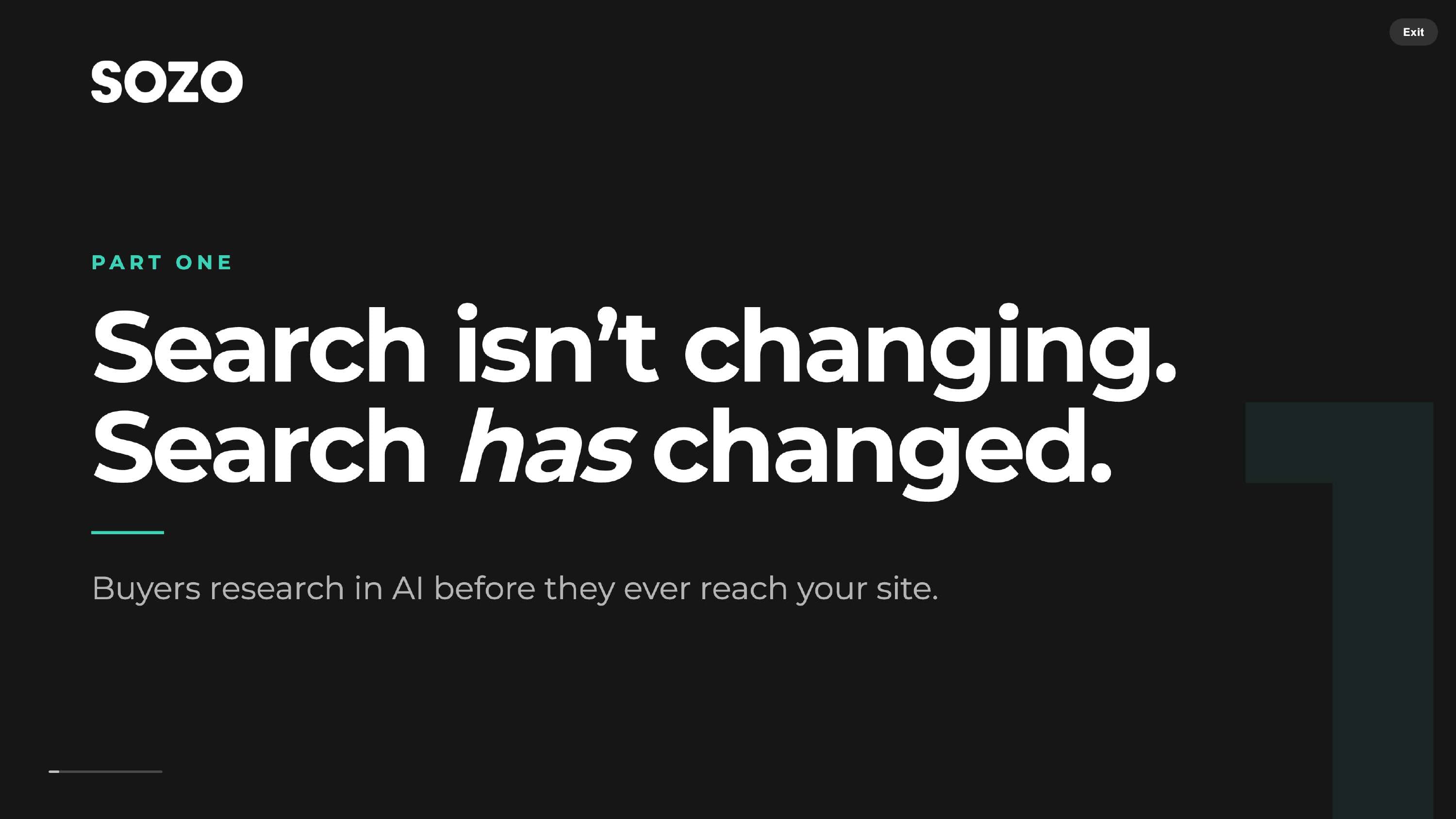
Right now, someone is asking an AI tool about your industry. Which providers are reliable. Which products are worth the money. Who the specialists are in your area. Those questions are being answered, confidently and fluently, without any input from you, and with no guarantee that what the AI says about your business is accurate.
I talk about this at industry events, and it’s the point that lands hardest every time. Not because it’s technical, but because it’s commercial. If AI is shaping how customers build their shortlist, and you’re either not on it or being described inaccurately, the damage is real and almost invisible on a standard analytics dashboard.
Find out more about this in our article about AI Search Transforming SEO for SMEs
Search has changed. Again.
In the early days of SEO, it was all about keywords. Find the right phrase, place it in the right spots, rank on page one of Google. Then it got more sophisticated: content quality, backlinks, technical performance, mobile experience. Each wave rewarded the businesses that adapted.
AI Search is a different kind of shift. It isn’t a new algorithm update. It’s a change in where people start looking in the first place. Approached well, it’s a genuine growth opportunity, not just a threat to manage.
The direction of travel is clear. ChatGPT passed 900 million weekly active users in February 2026, more than double the figure reported a year earlier. Advanced Web Ranking’s monitoring found AI Overviews appearing in more than 60% of US searches. Meanwhile, SparkToro’s analysis of Similarweb clickstream data found that 68% of US Google searches ended without a click in the first four months of 2026. An earlier study, using a different data panel, put the figure near 60% in 2024.
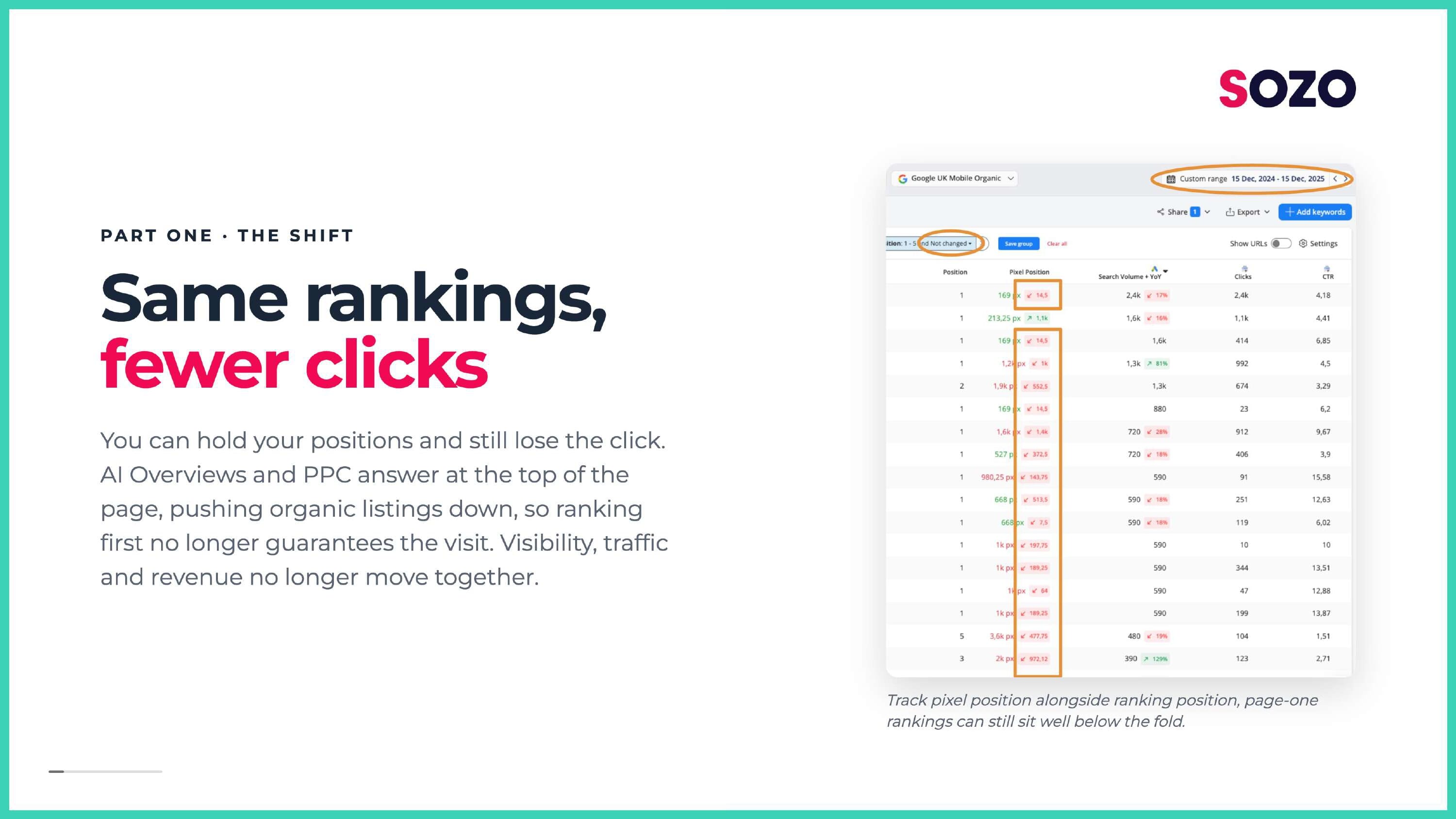
The precise figures will keep moving, but the behavioural shift is already established. More people are getting a synthesised answer and acting on it, without necessarily visiting a website.
Choosing a provider used to be close to a straight line: search on Google, click a website, make an enquiry. It isn’t any more. People move between Google results, AI answers, review platforms, LinkedIn, YouTube and community threads, and they often form a view before they ever land on your site. That’s what we mean by search everywhere. It isn’t a slogan, it’s how people actually look for things now.
How to check what AI says about you
Before you can fix anything, you need to see what a prospective customer actually sees. The instinct is to open ChatGPT and ask about your own business. Resist it. The account you use every day may be influenced by saved memories and previous conversations, depending on your settings, so it isn’t necessarily a fair test of what a stranger gets.
Here’s a quick version of the check we run:
- Use a Temporary Chat, or turn memory off, rather than relying solely on your normal account.
- Start with category questions, without naming your business, such as “who are the best [what you do] in [area]”, “which [type of provider] is most reliable”, and “what are the alternatives to [a known competitor]”.
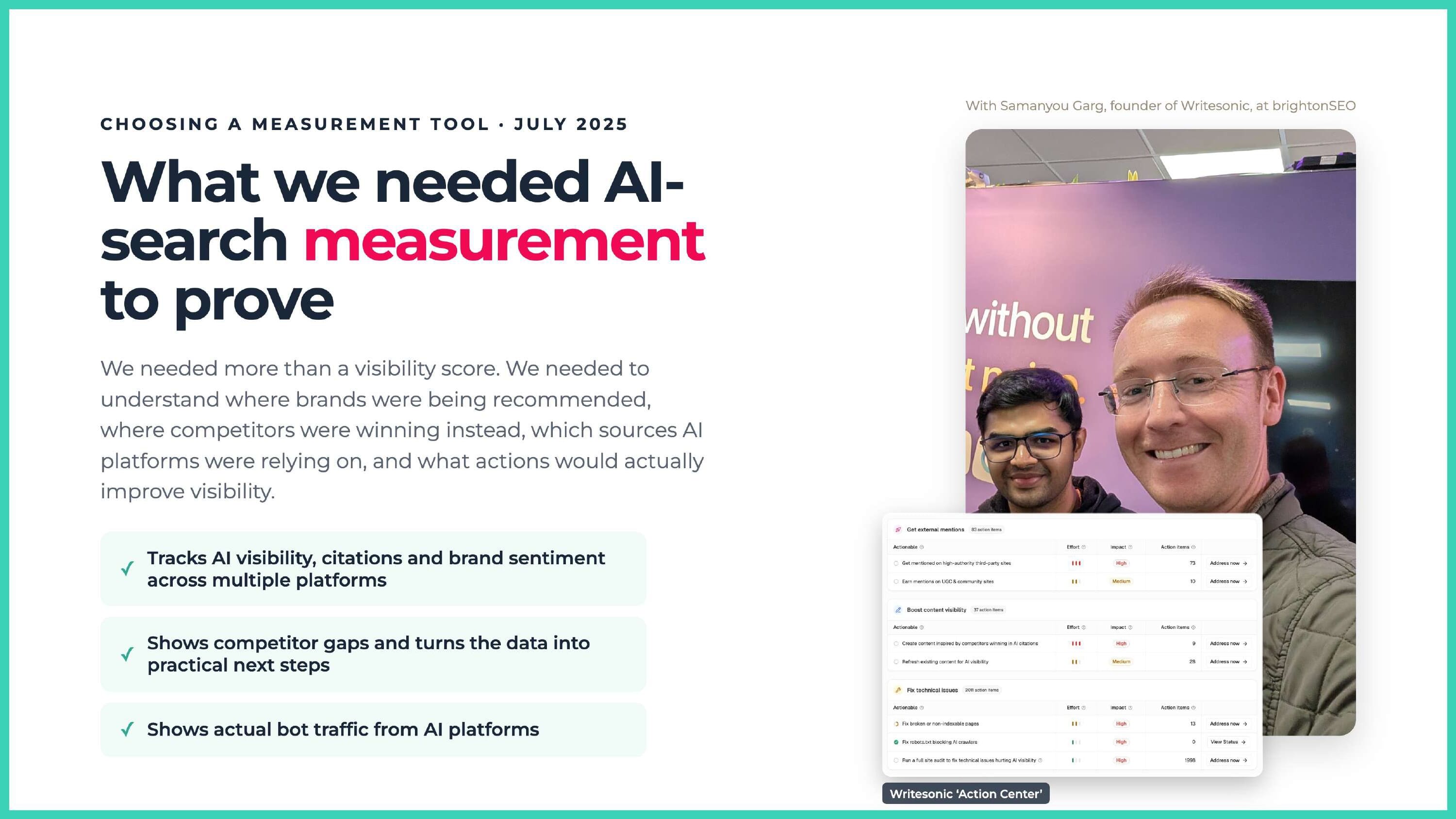
- Note four things each time: are you mentioned, are you actually recommended, is the description accurate, and which sources are cited.
- Repeat across ChatGPT, Gemini, Perplexity and Google’s AI answers. The results, and the sources behind them, differ from one to the next.That short exercise shows you something a conventional rankings report cannot: whether AI knows you exist, how it describes you, and which competitors it recommends instead.
Why the answer may be wrong
Getting mentioned is only half of it. What matters just as much is what the AI says when it does.
AI answers can draw on a mixture of your own website, third-party coverage, reviews, directories, forums and other sources available to the system at the time. If those are patchy, outdated or inconsistent, the picture it paints of you is too. Some businesses find their AI description is accurate. Others find it confidently wrong, citing a service they retired two years ago, or describing them in language a competitor would be delighted with. Others don’t show up at all in categories where they’re genuinely strong, because the signals simply aren’t there.
It isn’t only about accuracy, either. What AI says about you is often a customer-experience issue in disguise: an unanswered review, a delivery complaint, a pricing gripe, repeated straight back to the next potential customer. The AI is reflecting what the wider web already says.
Where AI gets its information
Here’s the part most businesses underestimate. Your reputation is pieced together largely from places you don’t own. In Muck Rack’s May 2026 analysis of more than 25 million cited links across ChatGPT, Claude and Gemini, around 84% were classified as earned media: journalism, academic research, government and NGO sources, encyclopaedic sites, social platforms and third-party corporate content. Owned content, on the businesses’ own sites, accounted for around 14%. It’s part of a wider trust problem across the web that AI now amplifies.
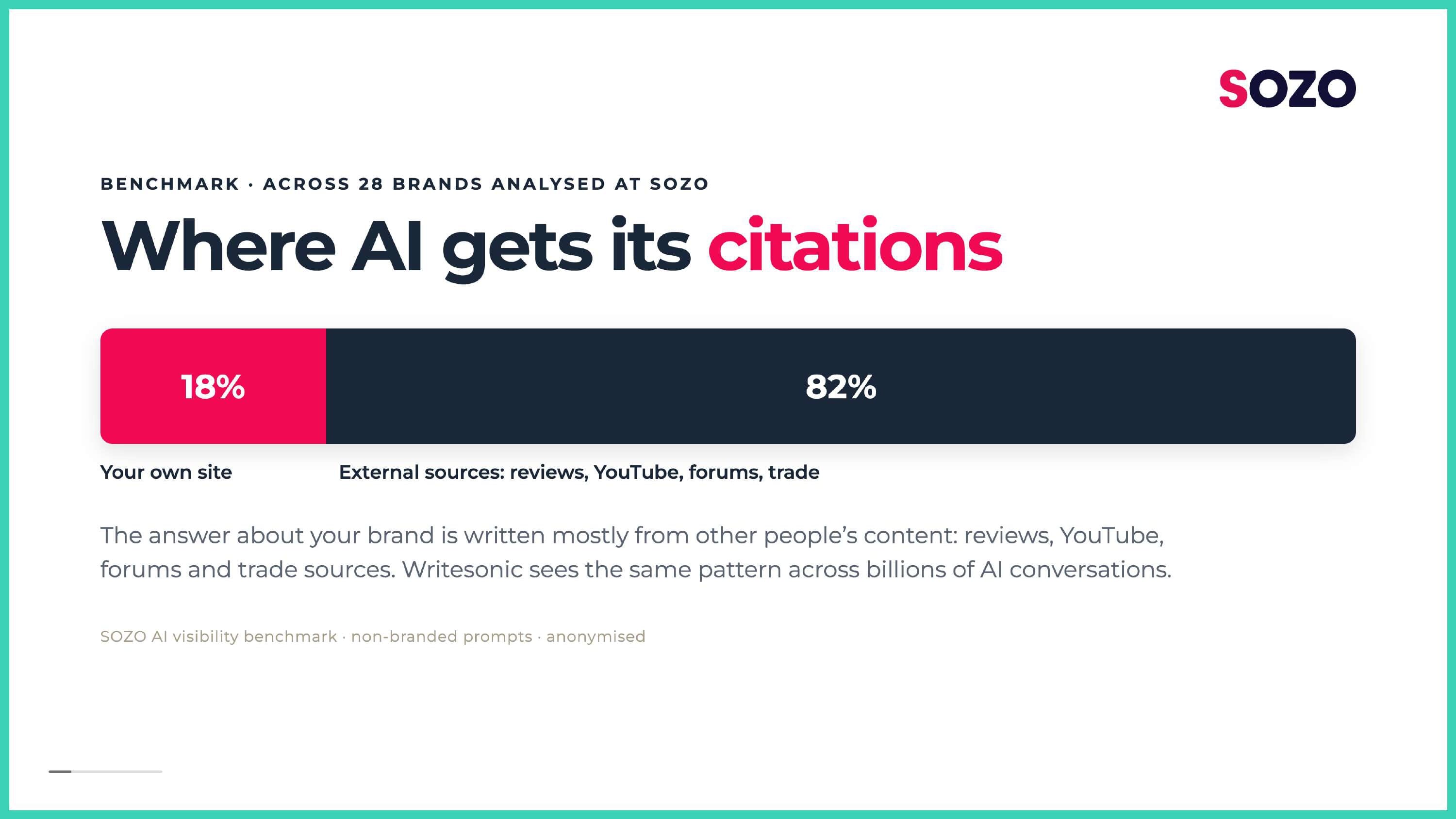
This lines up with what we see in our own AI visibility audits. Time and again, a brand ranks strongly on Google and still barely appears in AI answers, with competitors named in its place. When we investigate why, the issue often extends beyond the website itself. The brand may have strong organic visibility, but the third-party sources AI cites have far more to say about its competitors.
What your competitors may already be doing
The businesses showing up well in AI tend to be the ones already being proactive about their content, PR and media coverage, structured data and online reputation. Not by accident. The things that make a business credible to an AI are largely the things that make it credible to a human doing their due diligence.
It matters more than a rankings report suggests, because AI often compresses the decision into a much smaller set of named options. When someone gets an answer recommending two or three businesses, those are the names most likely to enter their consideration set. And being mentioned isn’t the same as being recommended. When AI does name businesses in your category, it’s effectively building a shortlist, and the only question is whether you’re on it.
This isn’t about abandoning SEO
None of this means walking away from SEO. Strong organic rankings still drive real traffic and revenue for most businesses. The mistake is treating traditional SEO and AI search as an either/or. They’re complementary, and it helps to be clear on where AIO and SEO actually differ. A well-structured SEO programme is good groundwork for AI visibility too, it’s just no longer enough on its own.
There’s an upside worth holding on to as well. Fewer people may click through from an AI answer, but the ones who do tend to arrive further along and more serious. Adobe’s Q1 2026 data found that visitors referred to US retail sites by AI converted 42% better than non-AI traffic in March 2026, and generated 37% more revenue per visit, although results will vary by sector. Smaller numbers, stronger intent.
The businesses that win from here will be the ones found everywhere their customers look, not by running a dozen separate strategies, but by building one coherent presence that AI systems, and people, recognise as credible. One of the most underused levers is earning credible third-party coverage and citations in the sources AI already relies on, rather than simply publishing more pages on your own site.
Find out more about what an AI-enabled agency offers here.
So, what is AI actually saying about your business?
If you’d like to see where you stand, what AI says about you, how your competitors are being positioned, and where the gaps are, we run a free AI search visibility audit and 30-minute consultation that gives you a clear picture without the jargon.
About the author
Christian Goodrich is Head of Organic Growth at SOZO. For 18+ years he’s helped ambitious brands turn search into revenue and measurable growth across SEO, paid search and AI search, and he speaks regularly at brightonSEO, Hero Conf and MeasureFest. His focus now is how AI is reshaping how brands get found, trusted and recommended. Connect with Christian on LinkedIn.

Sign up to our newsletter
Keen to learn more about how to grow online?
Get our latest advice articles, masterclass
videos and webinars.
curious for more?