



Blog
3 content hacks that will get your brand cited in AI search

Melissa
Copywriter
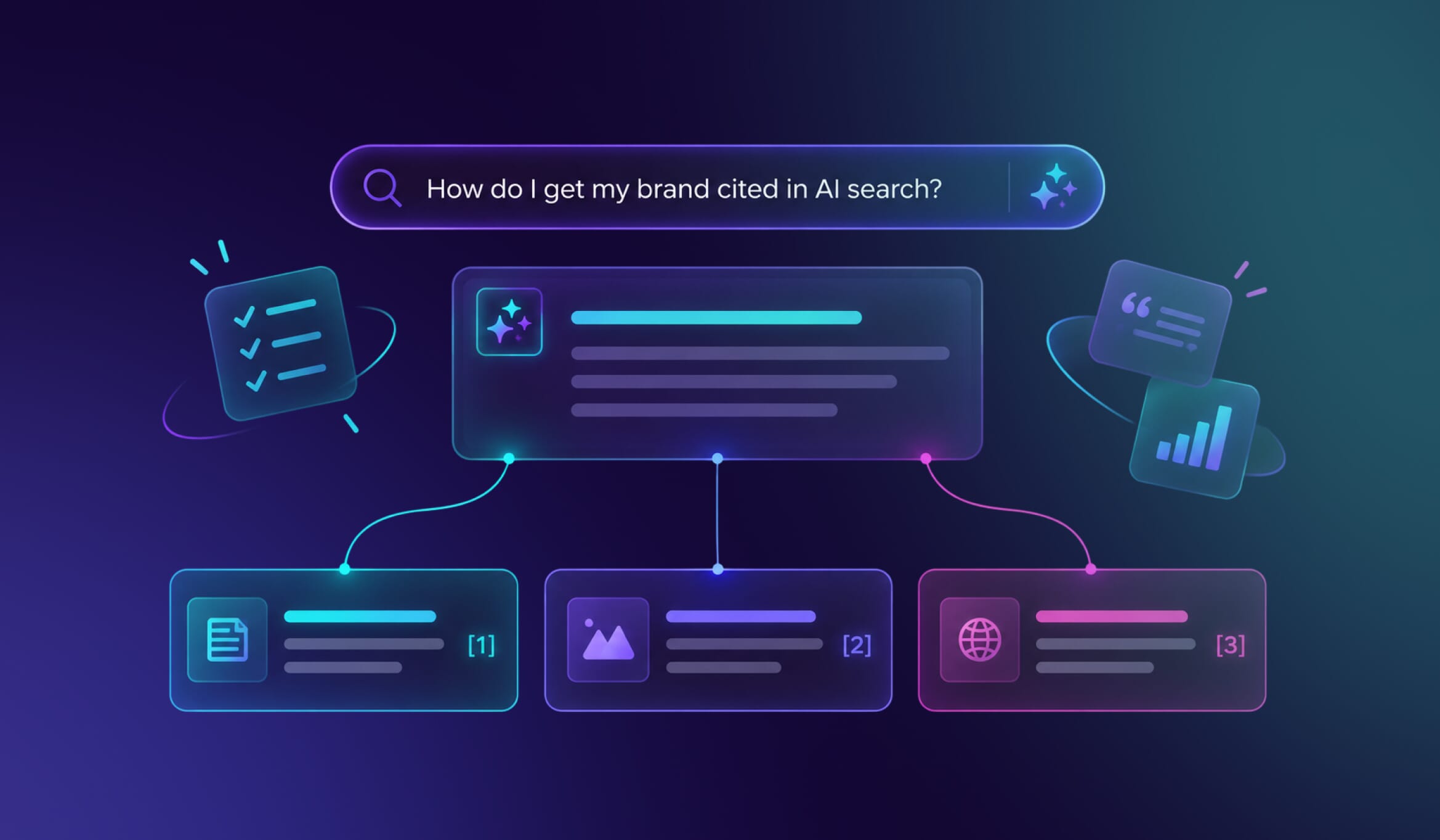
AI search feeds on quality content – but is yours good enough? To appear in AI answers, there are 3 things you need to get right. Warning: churning out more AI-generated copy is not one of them…
AI tools like ChatGPT, Gemini and Perplexity now answer many of the questions people used to Google. AI search traffic is becoming the biggest route to conversion with AI-referred visitors converting at nearly 50% more than standard SEO traffic, according to Shopify. Not surprisingly, the biggest question we are asked as an agency is, ‘How can I get my brand to show up first in AI search?’
Publishing regular, good quality content has long been the cornerstone for traditional SEO. But in this new age of AI search, content is more important than ever.
However, that doesn’t mean churning out more AI slop for the sake of it. Content today not only has to resonate with customers but it also needs to be written in a way that AI trusts enough to quote – and, ironically, that means primarily being written by a human for humans.
I’ve been putting that theory to the test with bioethanol fireplace retailer imaginfires since October 2025. Here’s what I’ve found.
How to write content that gets picked up in AI search
1. More relevant articles = more chances to be quoted
The more relevant questions your blog content covers, the more often you’re in the running to an AI answer.
I write four articles per month for imaginfires, with each tackling a real question that their customers ask – from how bioethanol fires compare with wood burners or electric fires, to how much they cost to run. Every new article increases topical authority around the targeted keywords and terms, giving AI one more reason to name imaginfires and send shoppers their way.
And that strategy is working. As of September 2026, 37.5% of imaginfires’ AI citations come from their blogs, which far exceeds any other page on their website.
2. Expertly structured content gets cited by AI
Volume means nothing if AI can’t digest what you publish. AI tools scan pages for clear, self-contained answers they can cite – so I build every imaginfires article to make those answers easy to find.
Take this wood burners vs bioethanol fireplaces comparison guide, for example. In August 2026 alone, AI tools cited it in 824 answers – here’s why:
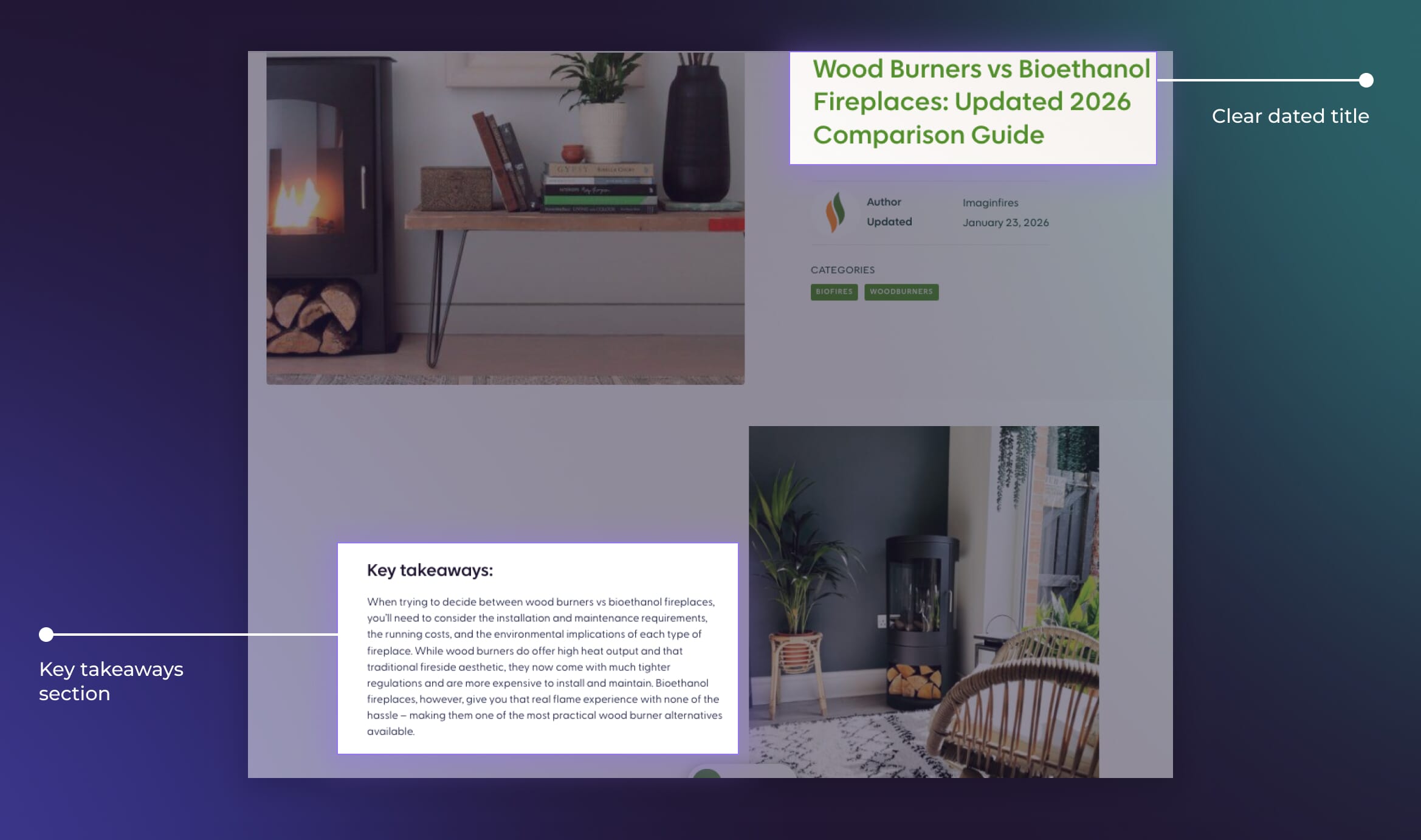
- A clear, dated title that tells AI the format and that the information is current
- A key takeaways section at the top that gives AI tools the answer straight away
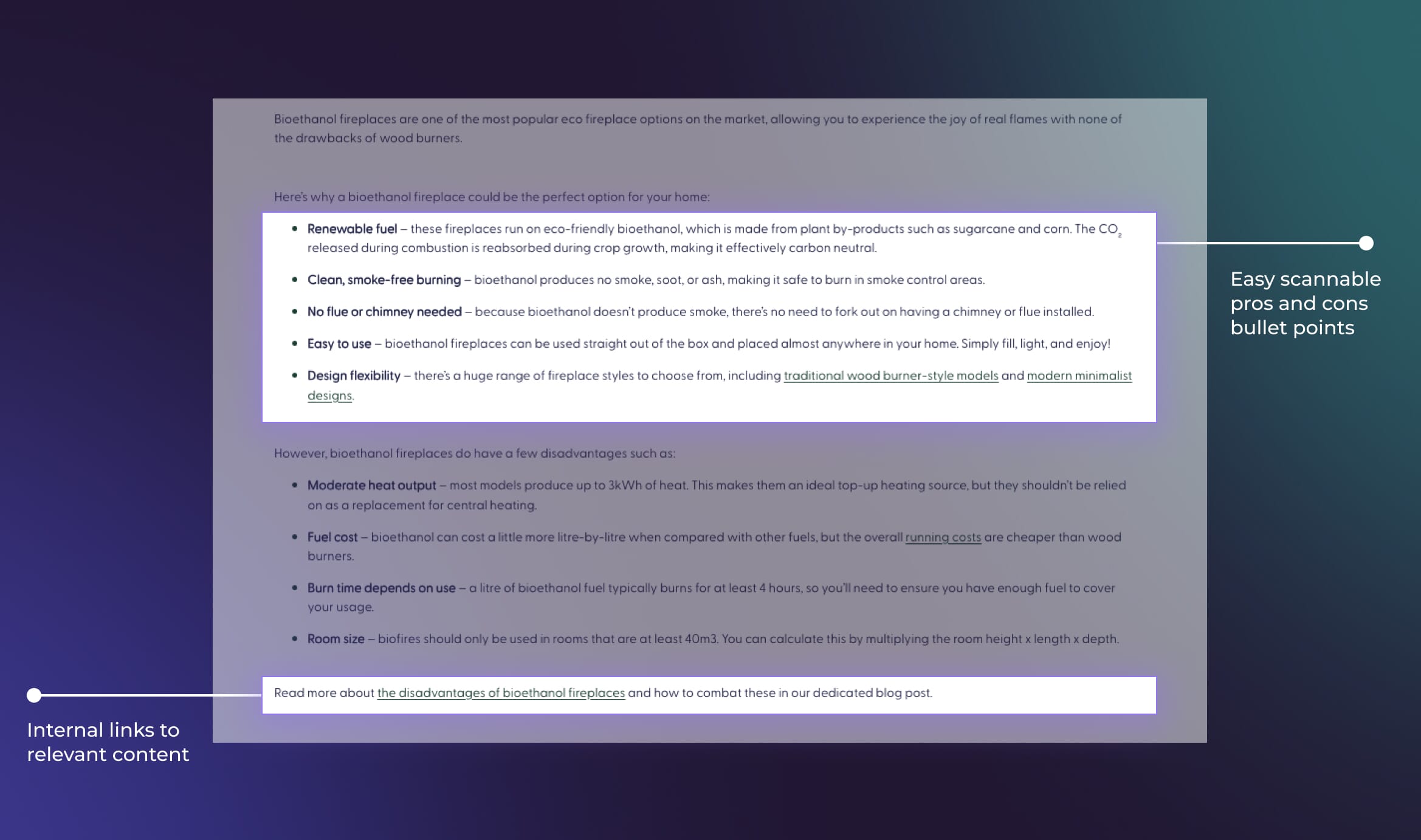
- Pros and cons in short bullet lists that AI can quote word for word
- Internal links that show AI how the content connects to the rest of the site
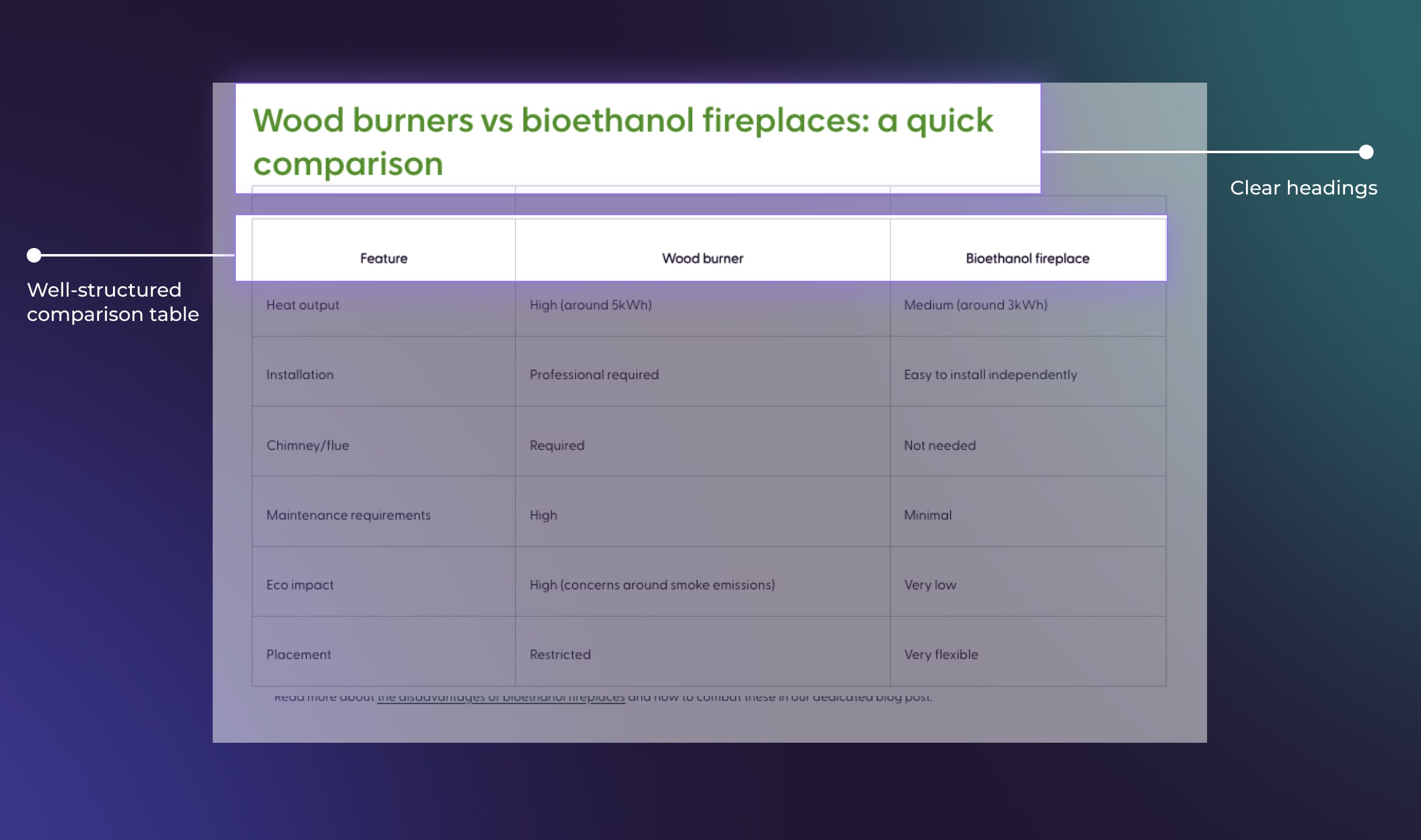
- Clear, descriptive headings so AI can quickly find the right section
- A side-by-side comparison table that AI can pull a direct answer from
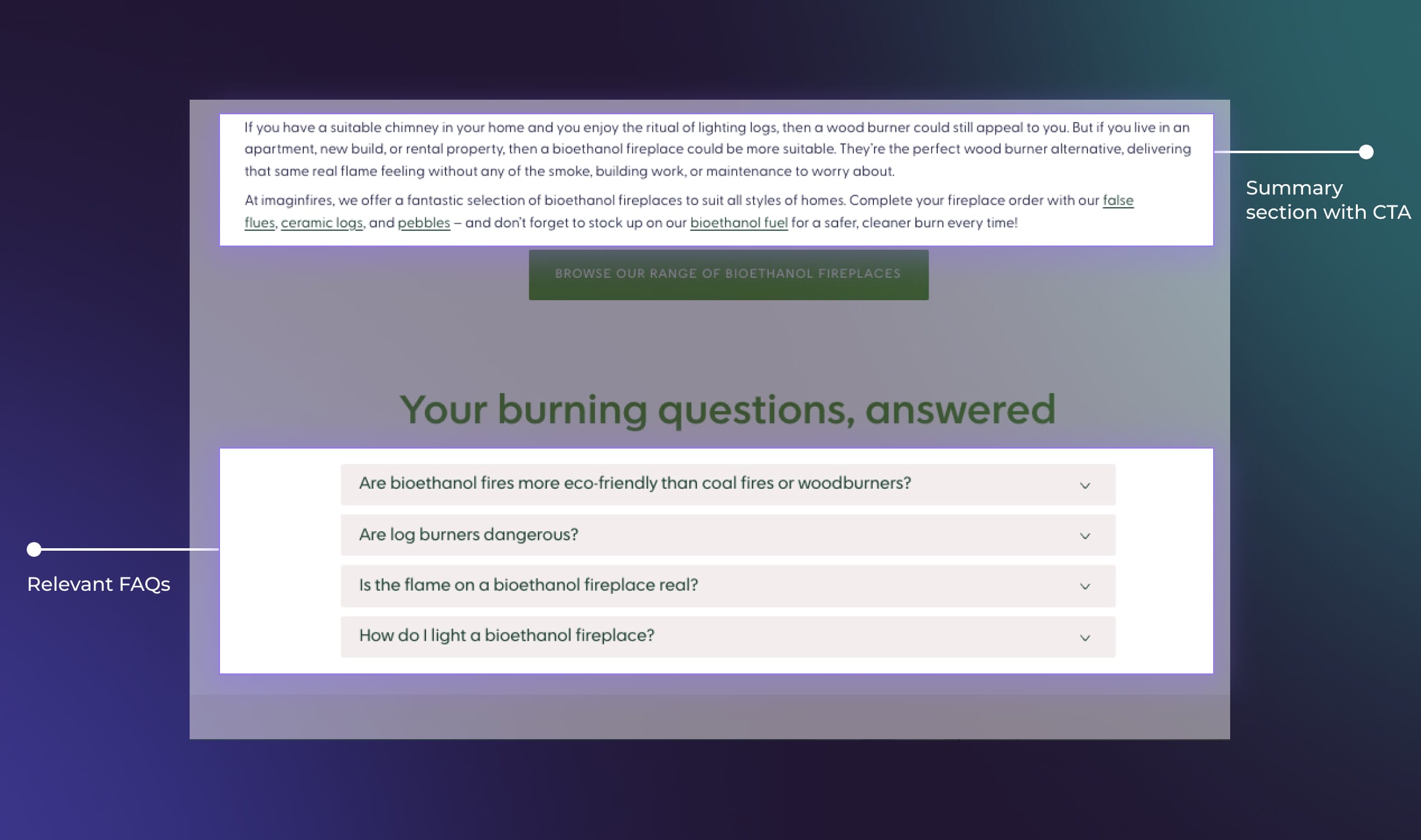
- A clear summary with a CTA that takes AI visitors on the next step of their journey
- An FAQ section that helps AI match real questions to ready-made answers
3. AI-generated content doesn’t get cited
One of imaginfires’ biggest competitors has more backlinks and reviews than them, but they predominantly publish AI-written content. In September 2026, AI answers only surfaced that competitor’s content 2.9% of the time, versus imaginfires’ content which was surfaced 42.3% of the time.
Real human expertise is the key to AI, Google and human-approved content. Every imaginfires article is written by me (a human copywriter), and backed by specialist knowledge from our Search Everywhere Optimisation team. We know their products, their market and what makes their customers tick, and every article is packed with the E-E-A-T (Experience, Expertise, Authority, Trust) signals that Google and AI look for. AI simply can’t replicate this level of human expertise, which is why their competitor’s content falls short.
I’ve seen what happens when brands get this wrong. Discover what happened when one of our clients used AI to update their website copy in our case study.

“AI search rewards the brands with the most useful answers. Brands need to publish consistent, high-quality content that AI trusts and will surface in its results, which still takes real human craft.”
– Christian Goodrich, Head of Organic Search at SOZO
A clear uplift in AI visibility and conversions
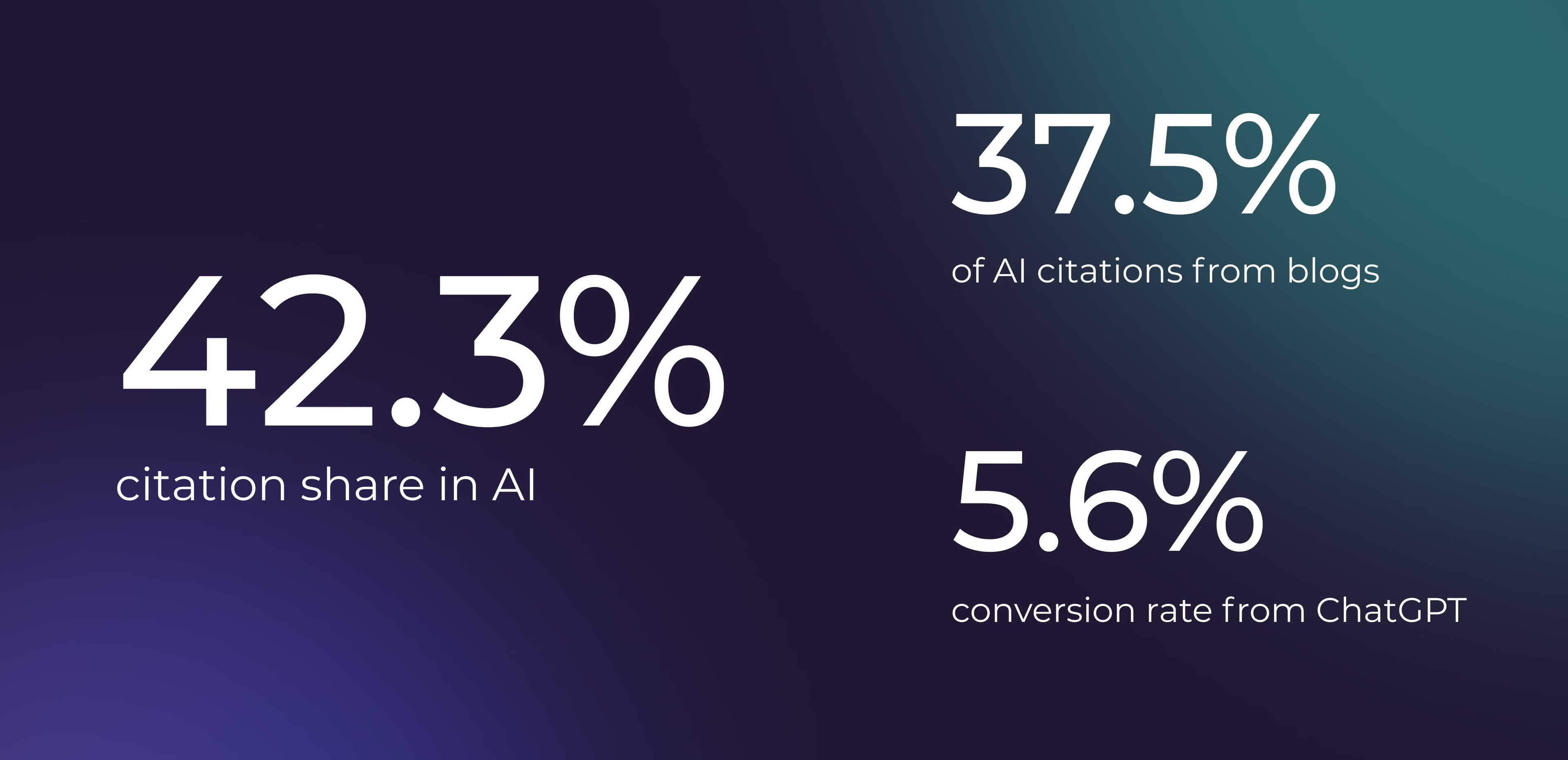
Publishing regular, well-structured website content has made imaginfires the most visible brand in its category in AI search (first out of six brands tracked). But that’s not all:
- As of September 2026, AI now draws on imaginfires’ content in 42.3% of tracked answers about bioethanol fireplaces.
- 37.5% of citations comes directly from the blog content that I write.
- Their non-branded AI visibility has grown by approximately 20% in 12 months.
- That visibility is turning into sales, with visitors arriving from ChatGPT converting at a rate of 5.6% (6x better than the site average).
Want help writing quality content that gets your brand cited by AI?
It’s clear that well-crafted, human-written content will get your brand noticed in AI searches. But that content also needs to be posted regularly and address relevant customer concerns. If the content that you post is not good enough, your competitors with better answers will win the AI recommendation – however good your other signals are.

We are specialists in writing content that will get you seen in AI answers. Every piece of content we produce – from blogs and product descriptions to case studies and website pages – is structured so that AI tools can extract answers easily, while still resonating with your human audience.
Let us do the hard work for you – Get in touch to talk about our content writing services.

Sign up to our newsletter
Keen to learn more about how to grow online?
Get our latest advice articles, masterclass
videos and webinars.
curious for more?