



Blog
Black Friday and AI Search: 5 Things to Fix Now for Maximum Visibility
Black Friday starts in AI search, and that search begins now
1st October. That’s the date from which many consumers start thinking about their Black Friday shopping, almost two months before the big day itself.
This year, more shoppers are also asking ChatGPT, Google Gemini, Perplexity and more about which retailers to watch and which deals are worth waiting for. If your brand isn’t in those answers by the end of October, then you’re less likely to be on the shortlist when your sales go live, no matter how good your deals are.
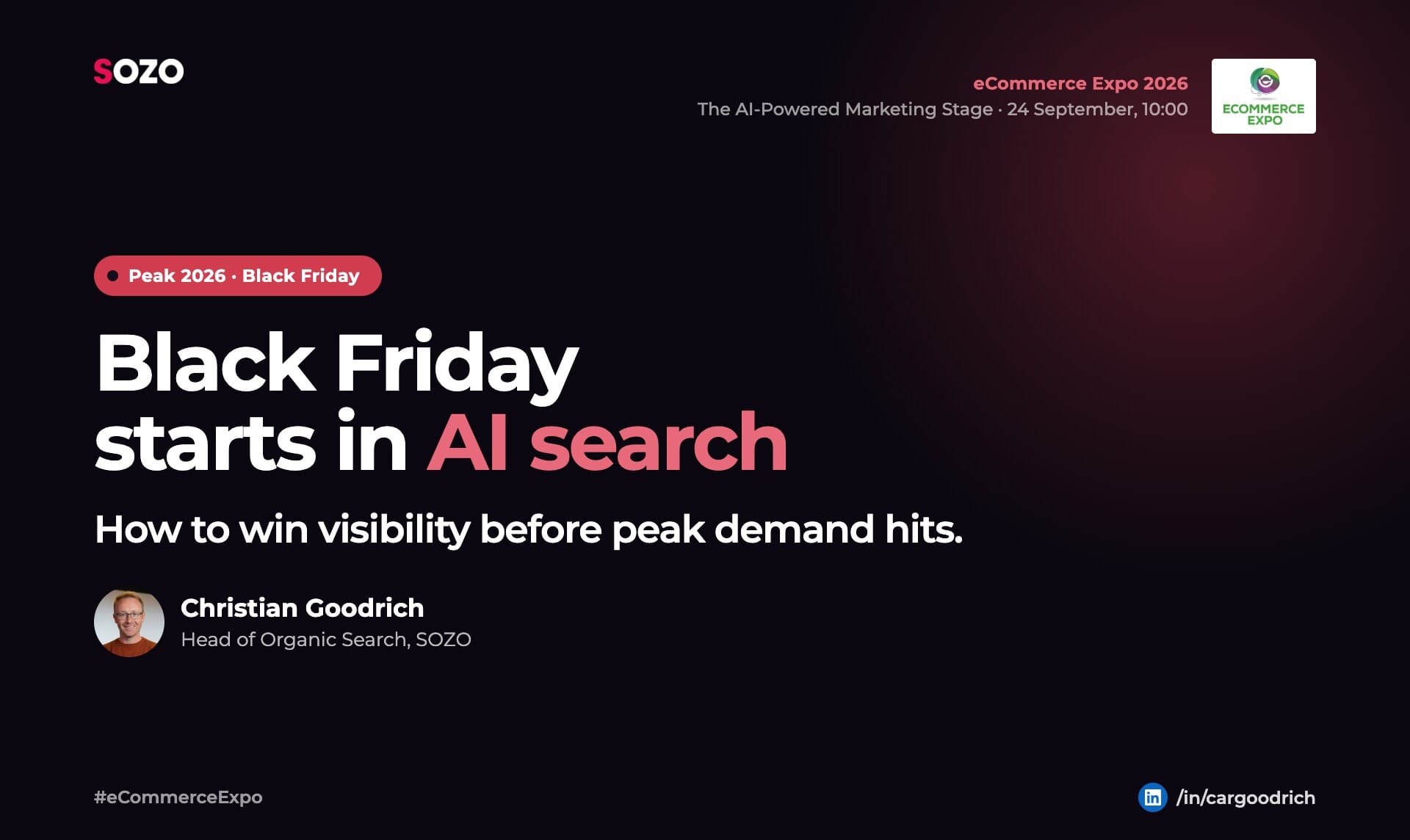
On 24th September 2026, I took to the AI-Powered Marketing Stage at eCommerce Expo 2026 with one simple message: Black Friday starts in AI search. Here’s what I shared on how to win visibility before peak demand hits.
As an added bonus, here is our full Black Friday eCommerce playbook free of charge.
Why AI-driven search should be a priority now
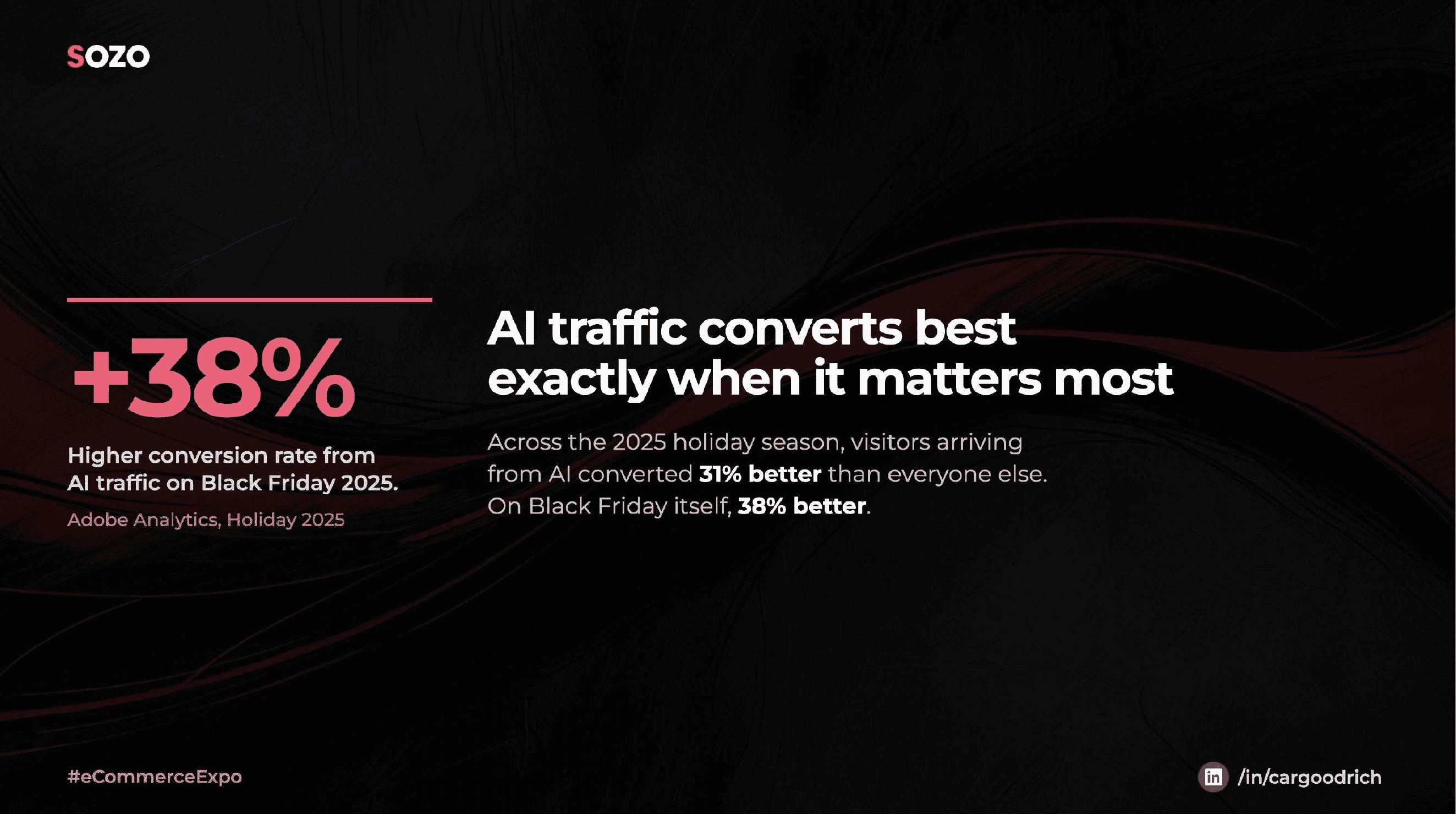
Shoppers who research purchases with AI assistants are some of the most valuable you can get. Adobe found that visitors arriving to websites from AI assistants converted 31% better than everyone else across the 2025 holiday season. And on Black Friday itself, they converted 38% better.
Why do these shoppers convert so well? Instead of just delivering a page of links, like with traditional Google search, an AI assistant gives a written answer that compares all the options and names a handful of retailers. By the time someone clicks through to your website from an AI answer, they already know what they want and why they’ve picked you.
It’s not possible to buy your way into AI answers, either. ChatGPT Ads have been live in the UK since 11th August 2026, but OpenAI states that ads do not influence answers. Compare that with Google, where results for peak Black Friday searches are packed with Shopping ads and sponsored listings. So it’s no longer enough to be Position #1 on Google; you need to be the brand that AI names when your customers ask.
Black Friday 2026 falls on 27th November, but your customers will begin their shopping journeys well before then. They’ll start to think about the products they want to purchase and research brands from 1st October, and actively hunt for deals from 1st November. That leaves a very narrow window to get your brand in front of shoppers before they make up their minds. Here’s what you need to prioritise before the peak season hits.
Read more about how to improve your rate of conversion here.
Five things to fix on your site before Black Friday
1. Correct any references to last year
When I checked one retailer in early September, it ranked first on Google for a Sonos Black Friday search and appeared in the AI Overview, but came fifth on ChatGPT, behind its main competitors. The title and copy on its Black Friday page still said 2025, which works against you when AI favours recent content.
To fix this, search site:yourdomain.com in Google to find any of your own references to last year’s Black Friday. Update these pages and then resubmit them for indexing through Search Console.
2. Build a page for every brand and product type
Try building a Black Friday page for every brand and product type your customers search for. Date each page for the year, add a buying guide and trust signals right at the top, and then submit it in Search Console so it’s indexed in a matter of days, not weeks.
3. Include the product information that AI needs
AI only repeats what it can read clearly. On every product page, spell out the price, stock, delivery, returns and review score, and make sure they’re consistent everywhere they’re listed. On your category pages, make sure you have a proper description and a named list of products, not just a grid of images. Start with your 20 best sellers.
4. Answer the 10 questions your customers ask
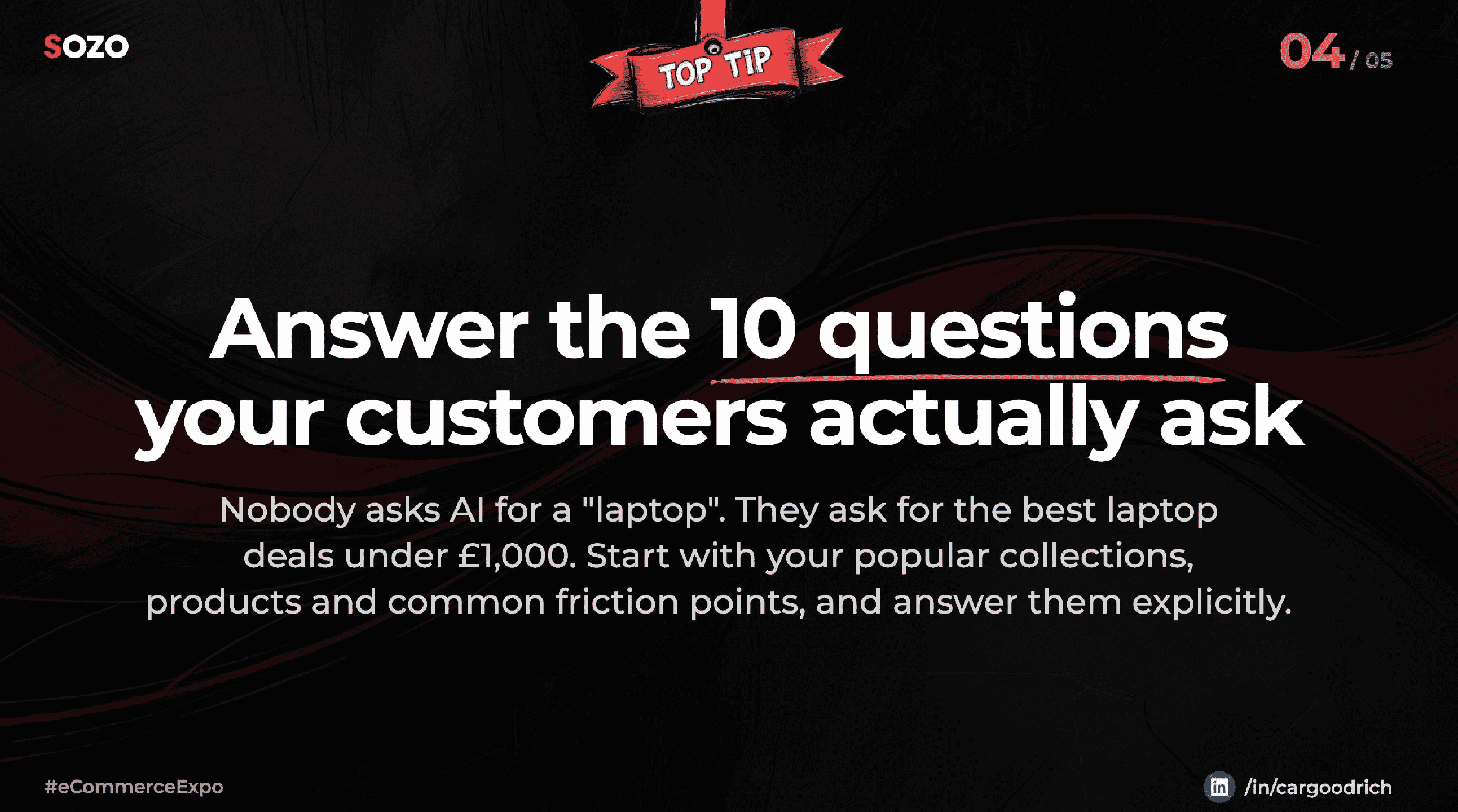
Nobody just types “laptop” into ChatGPT. Instead, they may ask for “the best laptop deals under £1,000 this Black Friday”. Build content and landing pages around the questions your audience asks. List the 10 questions shoppers ask about your most popular collections, products and common friction points, and answer each one clearly on your site.
5. Publish your promo codes on your own site
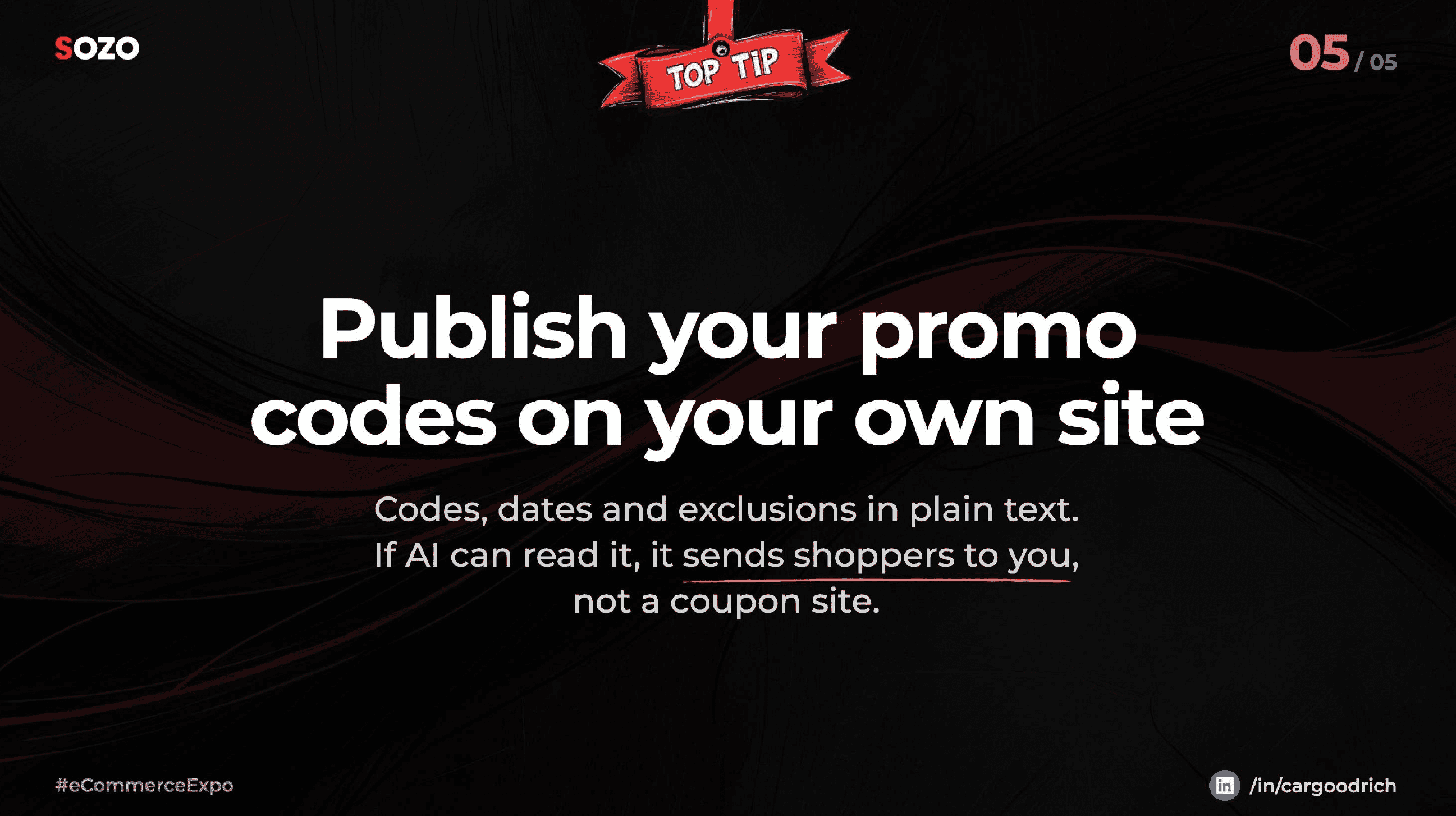
Publish all promo codes, dates and exclusions in plain text on your website. If AI can read them on your site, it will send shoppers directly to you rather than to third-party coupon sites.
Three ways to get AI to recommend your brand
Showing up in AI answers is just the start. To become the brand AI recommends, it has to trust you. Once you’ve made the five Black Friday fixes above, focus on these three points to build up your trust signals.
1. Make it clear who you are and why shoppers should trust you
Use the same name and description across your website, listings and social media pages. Make sure every page shows your delivery window, returns policy, reviews and where you’re based. If AI isn’t sure it can trust you, it will pick someone else to surface in its answers.
Then look beyond your site at your external reviews, forums, press coverage and stockist listings. Find the five sources AI quotes most in your category and work out how to get on them.
2. Find out what AI says about your brand
Ask ChatGPT, Gemini and Perplexity what you sell, who it’s for and what the downsides are. Do this in a private window, as otherwise the answer could be biased towards your brand.
Read the results as if you were a customer and pay particular attention to any negatives, as they’re usually the reasons AI might not recommend you. Any information that’s wrong, vague or out of date is easy to fix.
3. Monitor your brand in AI every week
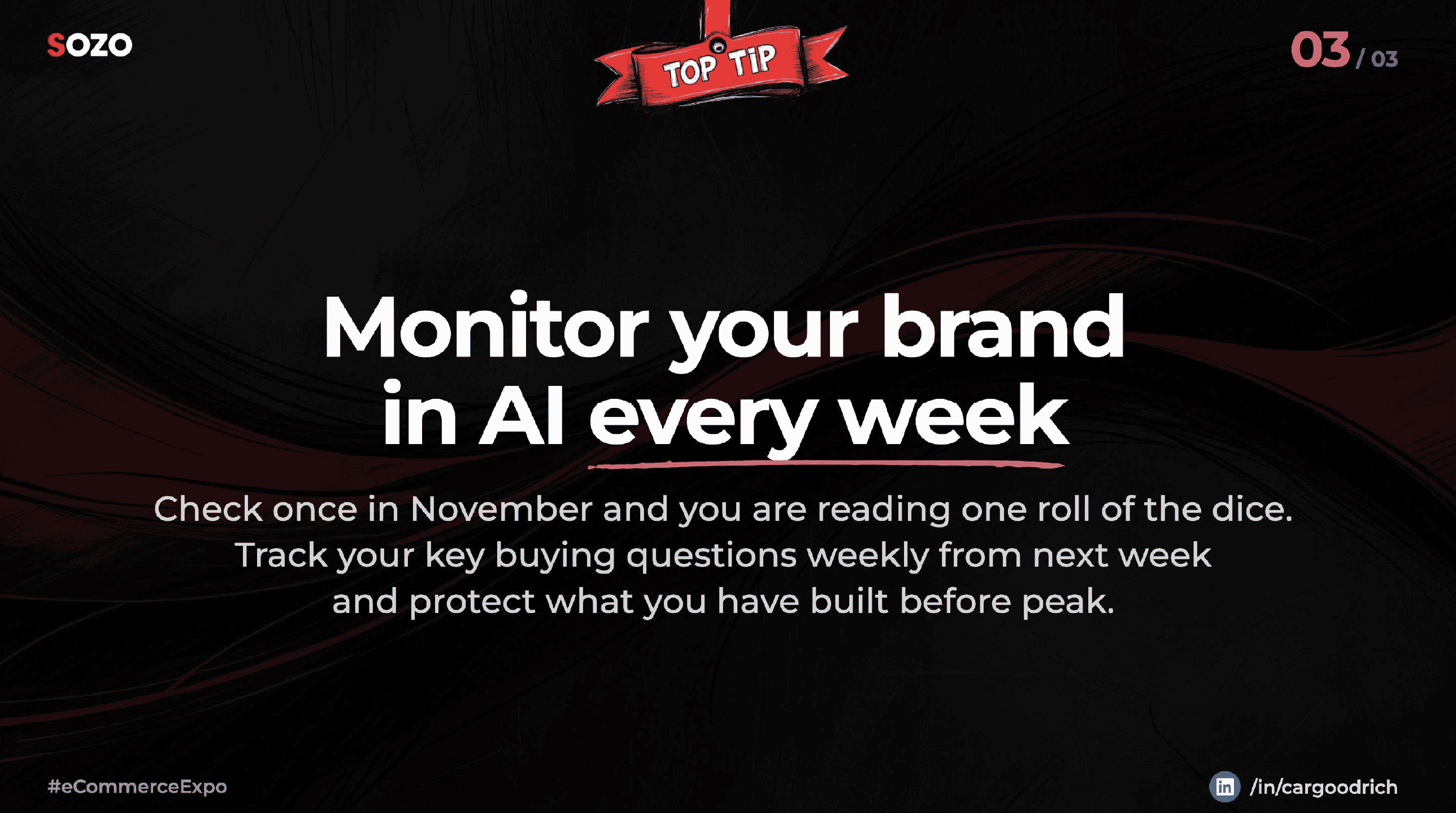
AI answers can vary a lot from one query to the next, so track your main buying questions weekly. That way, you can spot areas to improve before the peak season hits.
Find where your brand sits in AI answers
We offer a free AI visibility check to help you see how discoverable your brand is in AI search. We’ll run your prompt set against 5-10 key competitors and send you a free report showing where you’re mentioned and where you’re not. You’ll then be invited to book a 30-minute consultation with me to talk through the key recommendations on what to fix ahead of the peak season.
Get your free AI visibility report
About the author
Christian Goodrich is Head of Organic Search at SOZO. For more than 18 years he’s helped brands turn search into revenue and measurable growth across SEO, paid search and AI search, and he speaks regularly at brightonSEO, Hero Conf and MeasureFest. His focus now is how AI is reshaping the way brands get found, trusted and recommended. Connect with Christian on LinkedIn.

Sign up to our newsletter
Keen to learn more about how to grow online?
Get our latest advice articles, masterclass
videos and webinars.
curious for more?