



Blog
Is AI damaging your brand? (And are your competitors winning?)

Christian
Head of Organic Growth
When most businesses look properly at their AI presence for the first time, they find one of three things. They’re not there at all, they’re there but the description is wrong, or their competitors are being named confidently in their place. Quite often it’s all three at once.
In my previous article, I looked at what AI says about your business and why you should check it. This one goes a step further, into the questions I hear most from business owners once they’ve done that first check. Is what AI says about me accurate? Is it damaging my brand? And why are my competitors showing up when I’m not?
What AI brand damage actually looks like
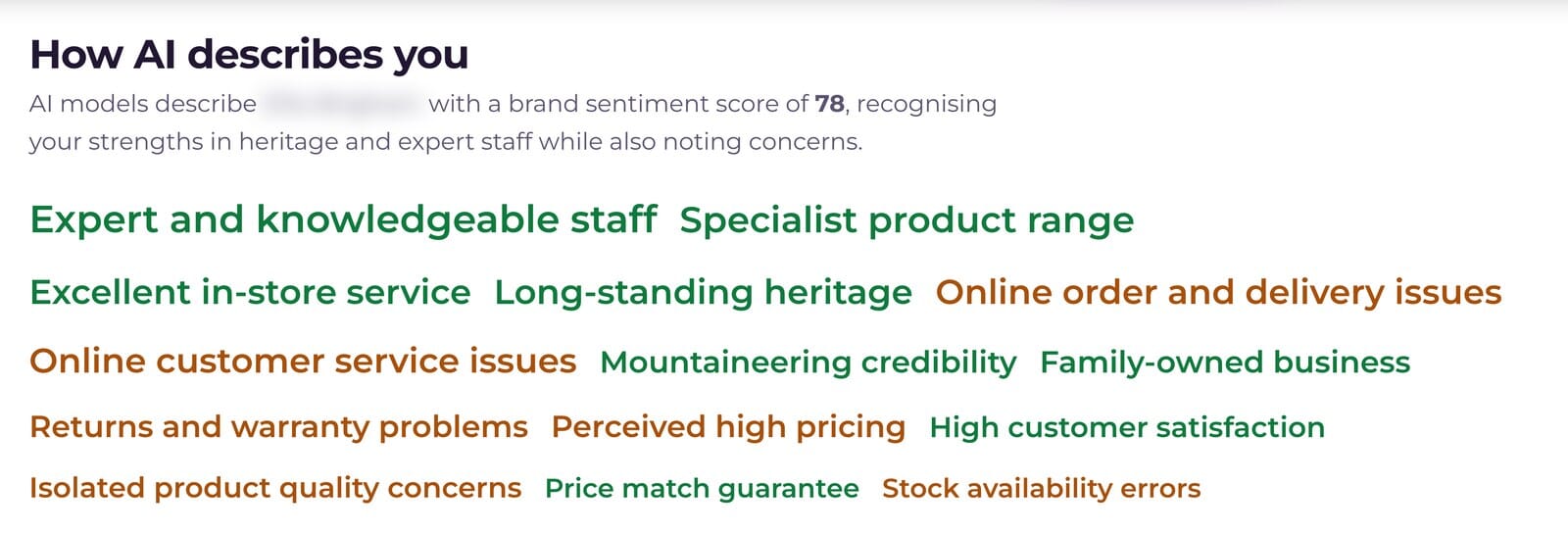
AI brand damage rarely looks dramatic, which is part of the reason it’s easy to miss. It might be a description that’s two years out of date, a service you no longer offer still being cited, or pricing pulled from an old directory listing. It might be a tone that doesn’t match where your brand is today. Or, more seriously, it might be a summary that reflects a cluster of negative reviews or forum complaints, presented without context to the next potential customer doing their due diligence.
In the AI visibility audits we’ve run this year, outright hostility has been the exception. Where AI does describe the brands we audit, the sentiment is mostly positive, so the more common damage is being left out altogether or described so thinly that there’s no reason to choose you. It happened to us too. When SOZO became B Corp certified, AI knew about the badge but couldn’t say what we’d done to earn it, so we built content to fill that gap.
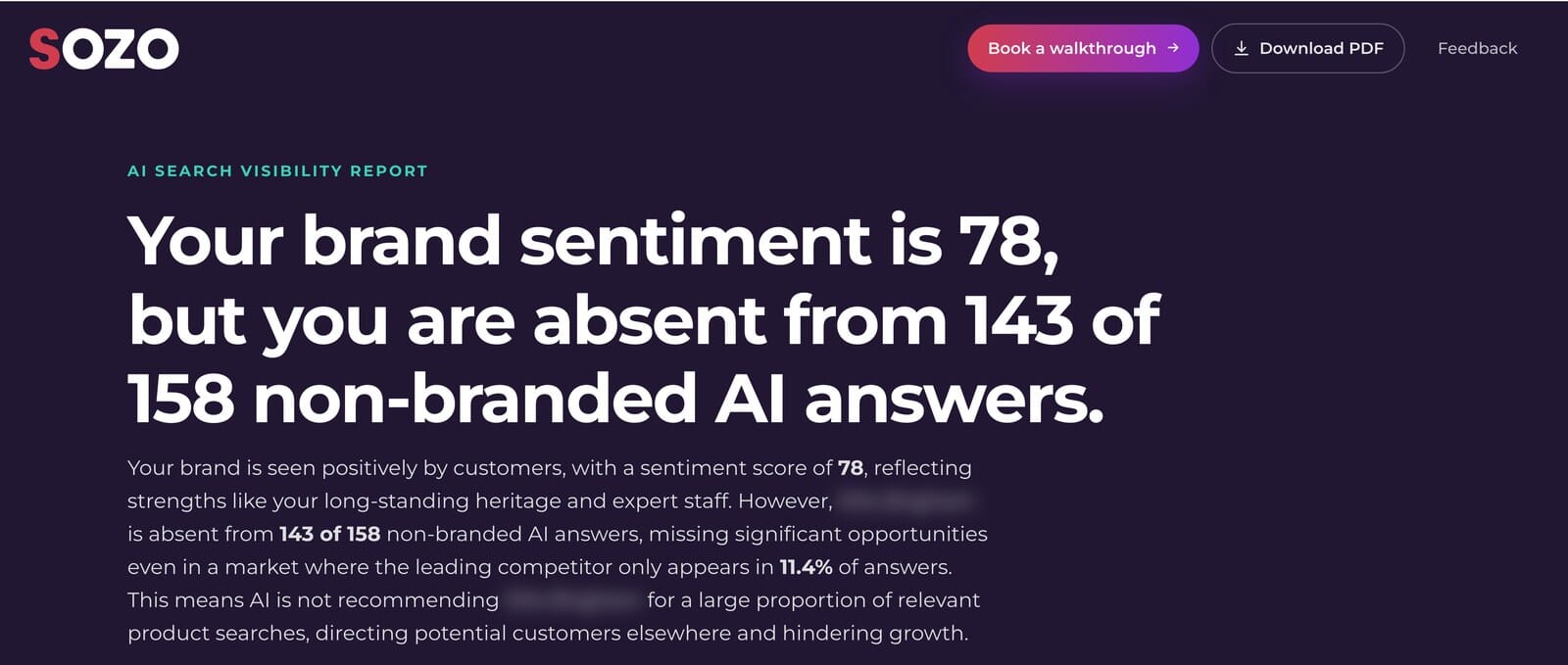
None of this triggers an alert. You won’t get a notification because ChatGPT described you inaccurately, and it won’t show up in your analytics. The customer who read the wrong thing and went elsewhere simply doesn’t appear in your data, and neither does the enquiry they would have sent.
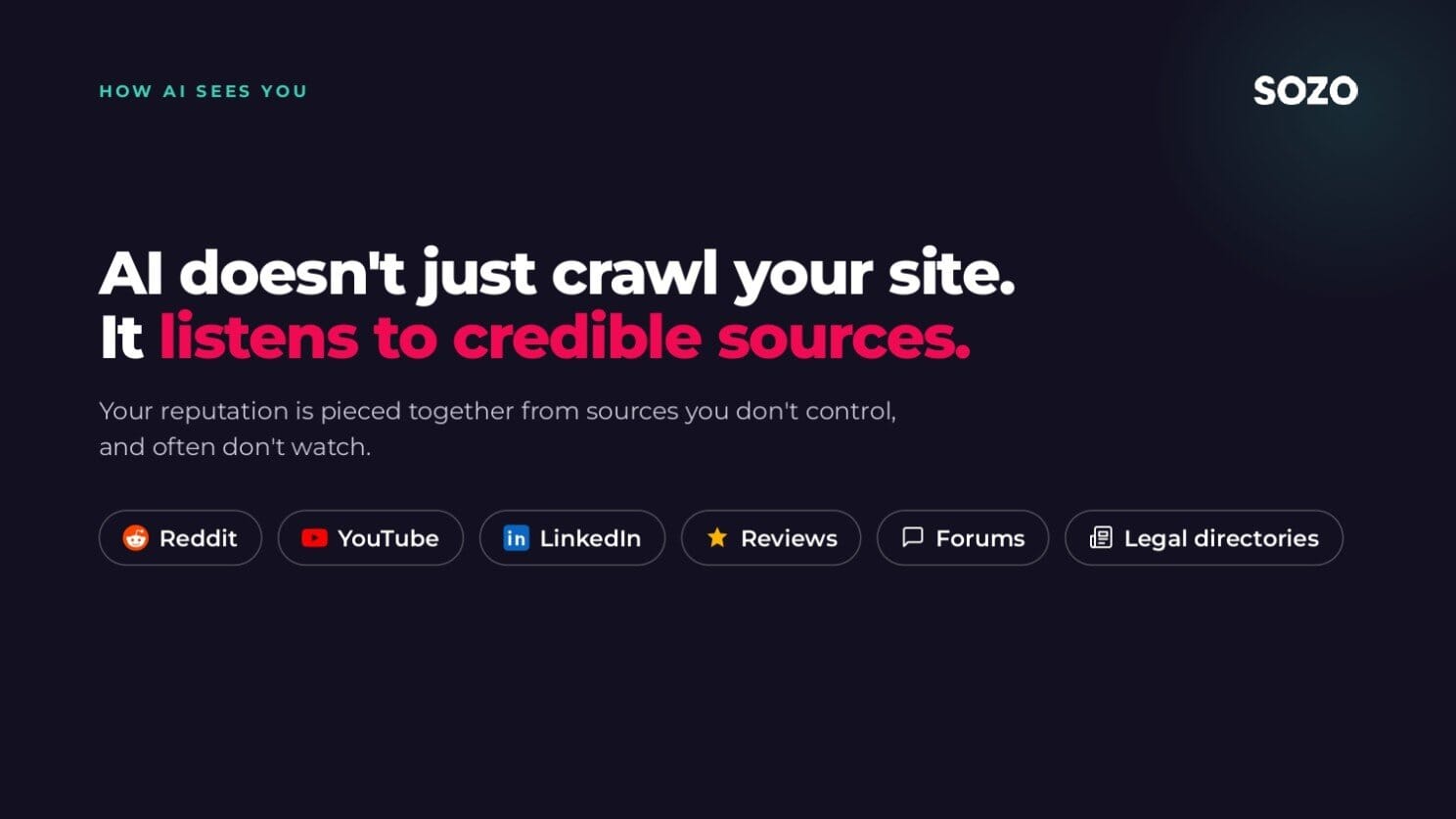
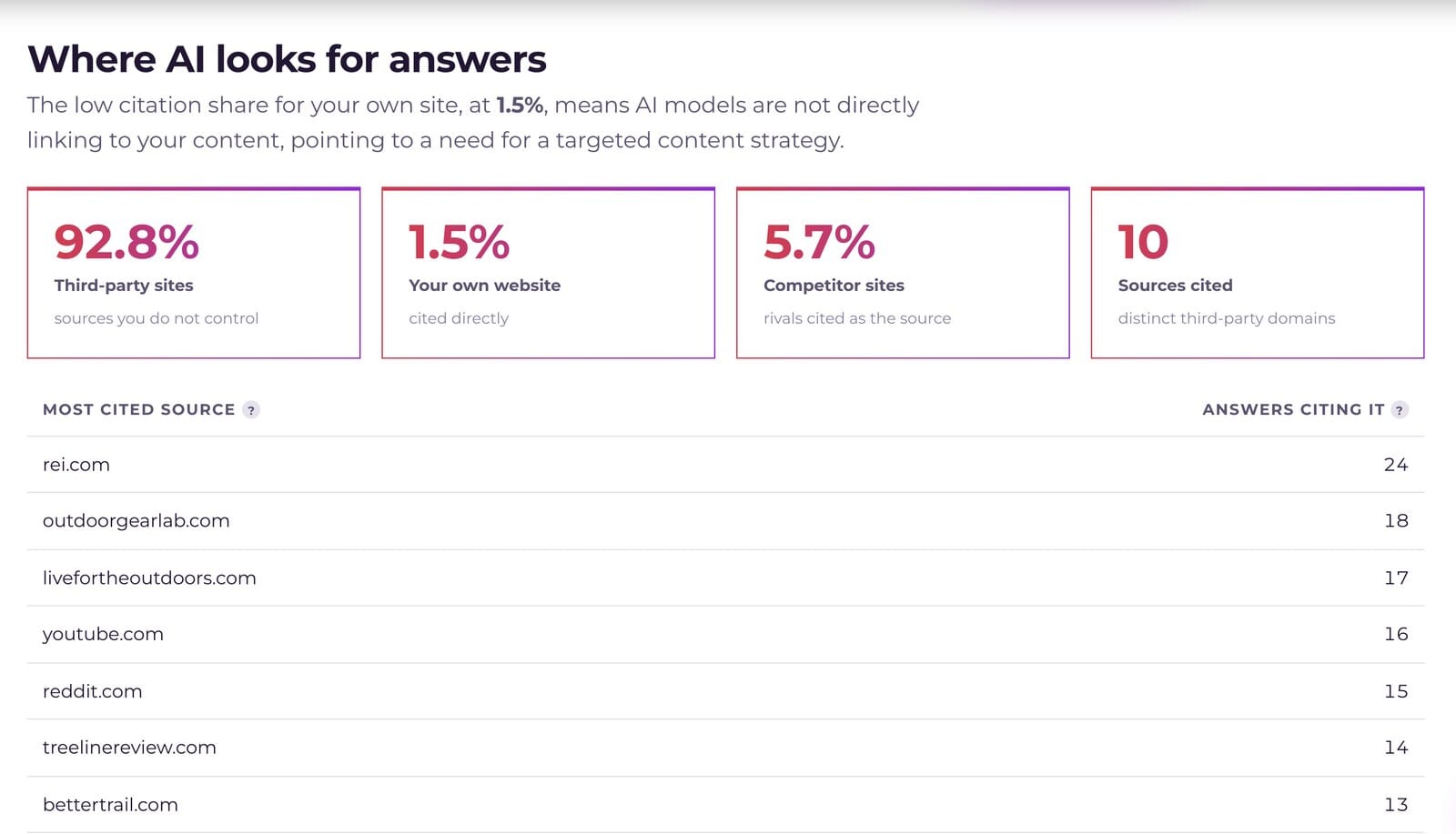
Part of what makes this hard to control is where AI gets its information. Muck Rack’s What is AI Reading? report, which analysed more than 25 million links cited by ChatGPT, Claude and Gemini, found that around 84% came from earned media, meaning journalism, academic research, government sources, encyclopaedic sites like Wikipedia, social platforms and content published by other companies. Content brands published about themselves, together with paid placements, made up only about 16%.
In other words, AI isn’t mainly reading your website and relaying it back, but reading what the wider web has said about you. Reviews, press coverage, forum threads and industry directories now shape your AI reputation more directly than your own messaging does.
Why competitors appear and you don’t
This is the question that tends to get the strongest reaction. Why does AI recommend my competitor, when I know I’m better than them in several ways?
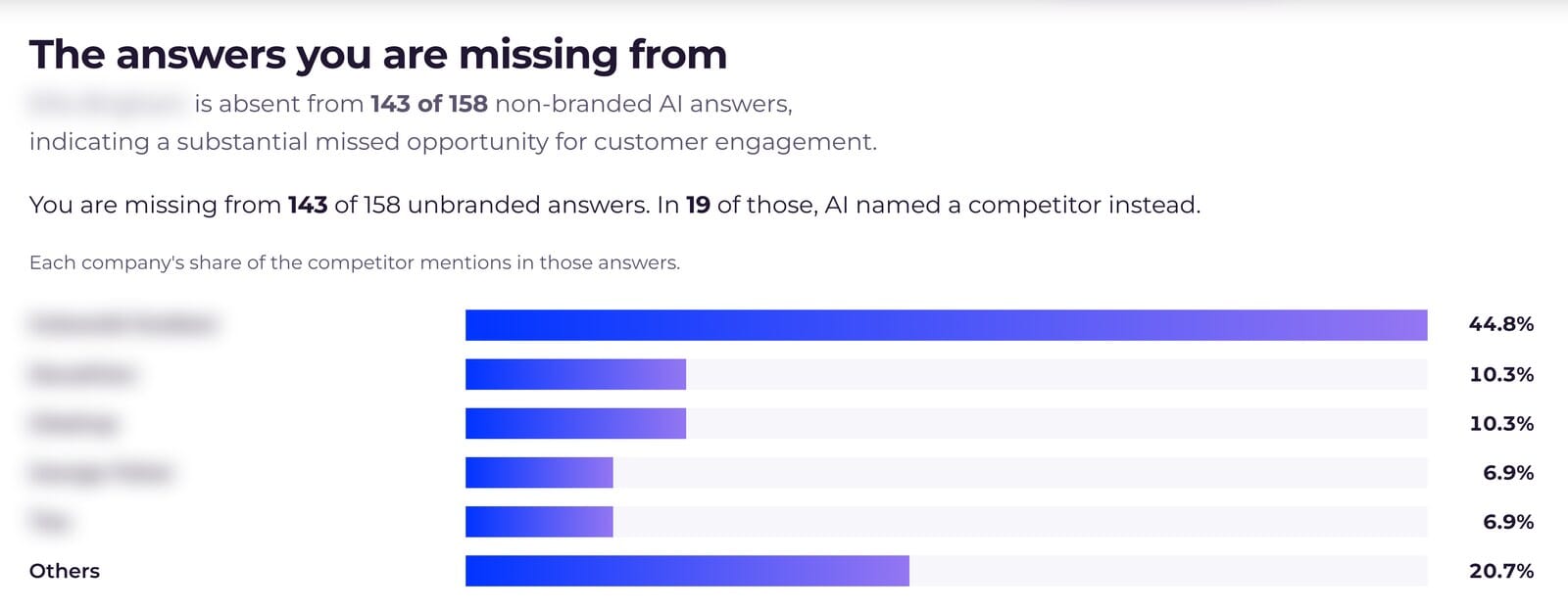
AI isn’t making a quality judgement, but an evidence judgement. The competitor that appears usually isn’t there because AI has weighed up the market and decided they’re better. They’re there because the signals AI uses to judge credibility (third-party coverage, reviews, citations, structured information and a consistent presence across several authoritative sources) are stronger for them than for you.
In practice this plays out in predictable ways. A competitor with a strong trade press profile, active customer reviews, detailed directory listings and a regular presence in industry conversations will consistently outperform a business with a better product but a weaker external presence. It’s the same logic that has always applied in search, where being good isn’t enough if the evidence of it doesn’t exist where the system looks.
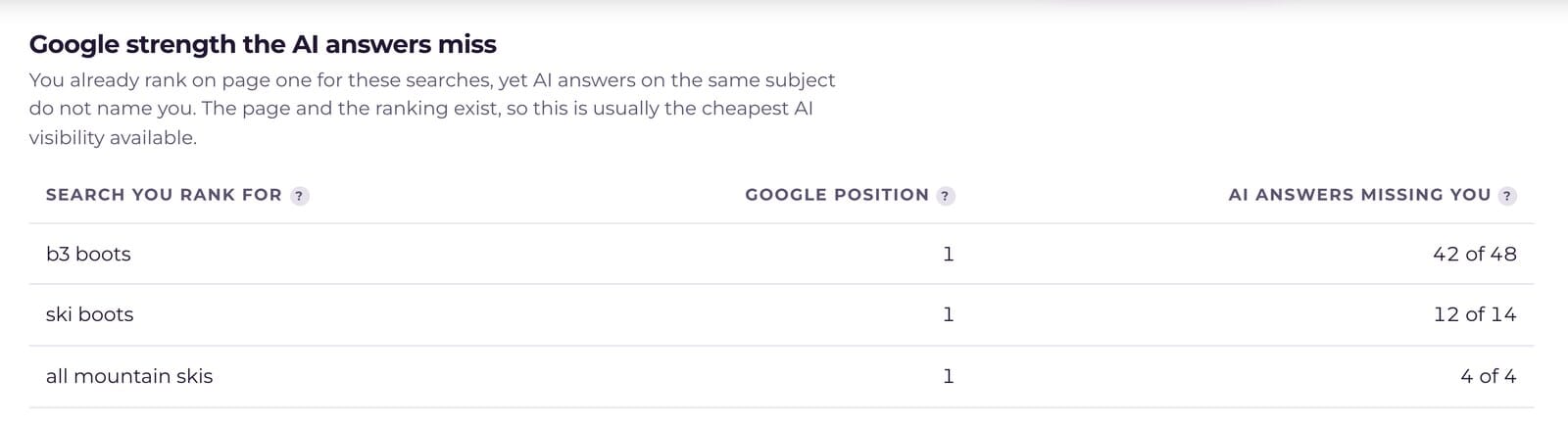
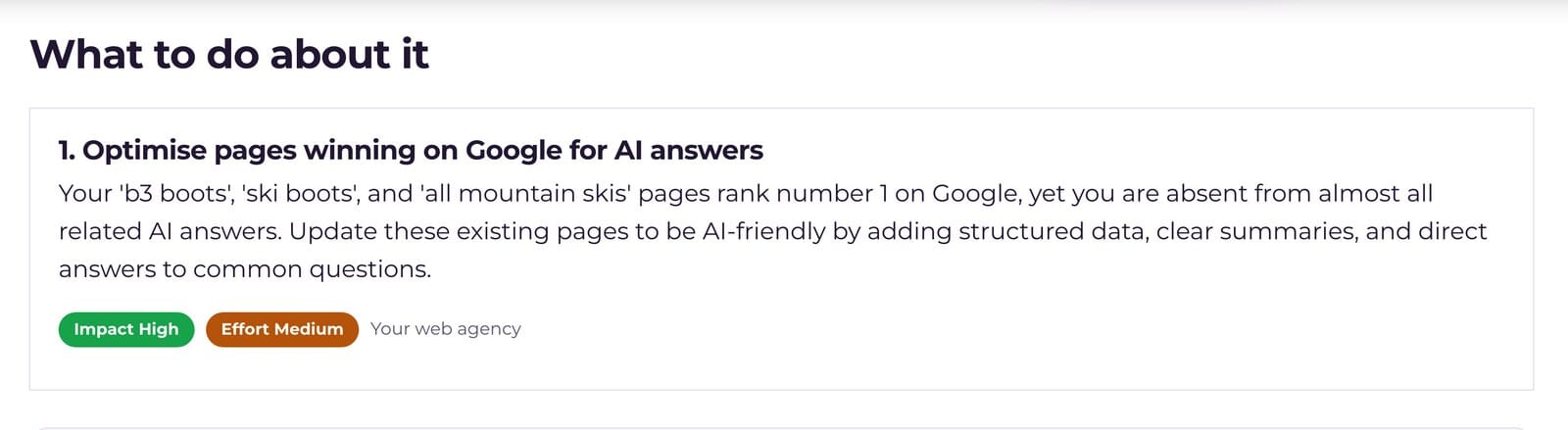
One homewares retailer we work with ranked first or second on Google for nearly all its commercial terms, yet when we ran its AI visibility audit it was barely showing in AI Overviews, while a direct competitor kept appearing in the answers. The difference wasn’t the website, but the competitor’s YouTube channel, which had seen a new upload every week for years while the retailer’s hadn’t been touched in four.
What makes this commercially significant is the way AI compresses the consideration set. When someone asks an AI tool which providers are worth speaking to, the answer comes back as a handful of names. When we tracked three UK eCommerce brands across 216 prompts and more than 162,000 AI answers, the typical response named three to five brands, and 15% named nobody at all. That’s a shortlist in all but name, and being left off it isn’t a neutral outcome. The customer has formed a view before your website, your sales team or your reputation has had any chance to influence them.
Can you trust what AI says about your brand?
Most of the time, AI isn’t inventing things about your business. It does get facts wrong, but it’s usually working from sources and trying to reflect what they say. Those sources are often incomplete or out of date, and they’re weighted towards whatever happens to have been written, indexed and cited, whether or not it’s accurate or representative.
A single unresolved negative review, a forum thread where someone had a bad experience three years ago, or an old directory entry with the wrong service description can all end up over-represented in an AI answer if they’re among the cleaner, more citable sources available. AI doesn’t know the review came from a difficult customer or that the directory entry was never updated. It knows the source exists and looked credible enough to cite.
That’s why passive reputation management is no longer a safe approach. For most of the last decade, a business could reasonably assume its own website, kept broadly up to date, would represent it well enough in search. That assumption falls apart when the channel doing the representing draws mostly on third-party sources it chose itself.
What shapes your AI reputation
From what we see consistently in our AI visibility audits, these are the factors with the most influence.
- Third-party coverage. Mentions in trade press, industry publications, local news and credible blogs carry a lot of weight, particularly when they include specific, factual information about what you do.
- Review platforms. Google reviews, Trustpilot and sector-specific review sites are cited regularly, and both recency and how you respond count. An unresolved negative review is a customer experience issue and an input into what AI tells people about you.
- Directories and data aggregators. Many AI systems draw on structured data from directories. Inconsistent details across Yell, Checkatrade, Companies House and sector-specific directories create conflicting signals, which leaves AI less sure who you are and what you do.
- Social platforms and community content. Reddit threads, LinkedIn articles and YouTube videos are showing up more and more as cited sources (Reddit is Gemini’s most-cited domain in the Muck Rack study). Community opinion, good and bad, is finding its way into AI answers more than most brands realise.
- Your own content, structured well. Content that’s well structured, factually specific and clearly attributed to a named expert performs better than generic copy.
The upside is just as real. One solicitor firm’s board nearly cancelled a review-platform subscription because it wasn’t producing enough attributed leads to justify the cost. Our audit showed that same platform was one of the most credible sources AI drew on when people asked whether the firm could be trusted, so cancelling it would have weakened the answer at the point a client was deciding.
Across all of these, AI rewards breadth of credible evidence, not depth of self-promotion.
How to start closing the gap
The most effective starting point is an honest audit of what the wider web says about you, as well as what your own site says. Where are you mentioned, what’s being said and which sources are AI tools citing when they talk about your category? That picture often looks quite different from what an internal team would assume.
From there, the first priorities are usually fixing the most visible inaccuracies in third-party listings, building a more consistent pattern of credible external mentions and making sure your own content is written and structured so AI can interpret it and cite it accurately.
There’s more overlap between good copywriting and AI search than people expect. Content that’s specific, well organised and clearly attributed to named expertise tends to perform better with human readers and AI systems alike. It’s something our content team has been developing alongside our AI search work, and they’ll be sharing more on it in an upcoming article.
None of it happens overnight. Reviews, coverage and consistent listings all take time to build, which is the best reason to start now.
Where do you stand?
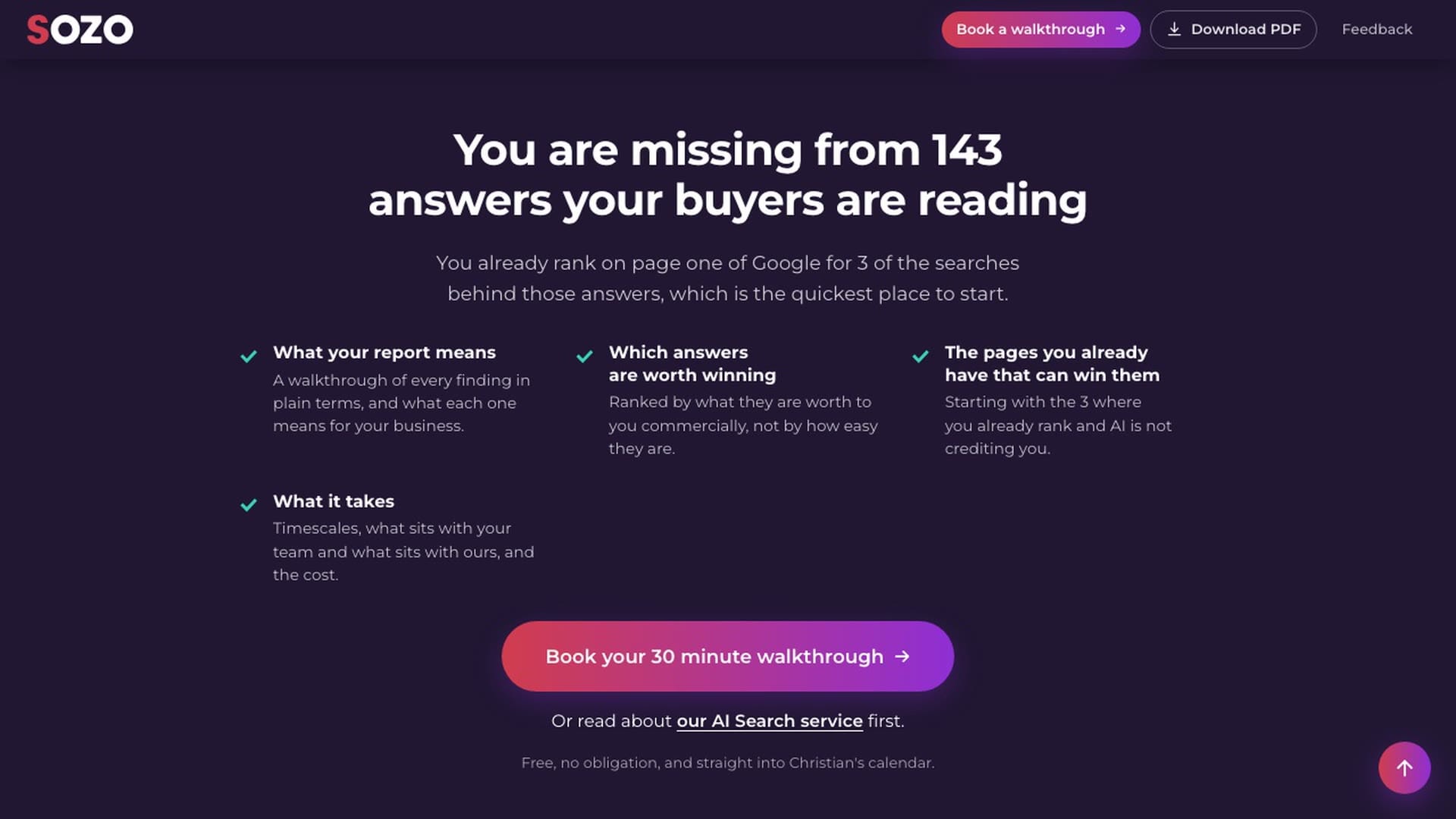
If you’re not sure what AI is saying about your brand, or why your competitors appear where you don’t, a free AI search visibility audit is the clearest way to find out. It shows how your brand appears across ChatGPT, Perplexity, Google’s AI Overviews, AI Mode and other platforms, how your competitors are being positioned, where the inaccuracies are and what the realistic options are for closing the gap. I’ll then go through the findings with you in a 30-minute consultation.
If you’d like to see how we approach this work more widely, our AI search services page covers it.
Get your free AI visibility report
About the author
Christian Goodrich is Head of Organic Search at SOZO. For more than 18 years he’s helped brands turn search into revenue and measurable growth across SEO, paid search and AI search, and he speaks regularly at brightonSEO, Hero Conf and MeasureFest. His focus now is how AI is reshaping the way brands get found, trusted and recommended. Connect with Christian on LinkedIn.

Sign up to our newsletter
Keen to learn more about how to grow online?
Get our latest advice articles, masterclass
videos and webinars.
curious for more?