



Blog
Google announces Universal Cart. Here’s what eCommerce brands need to know.

Mark P
Head of eCommerce
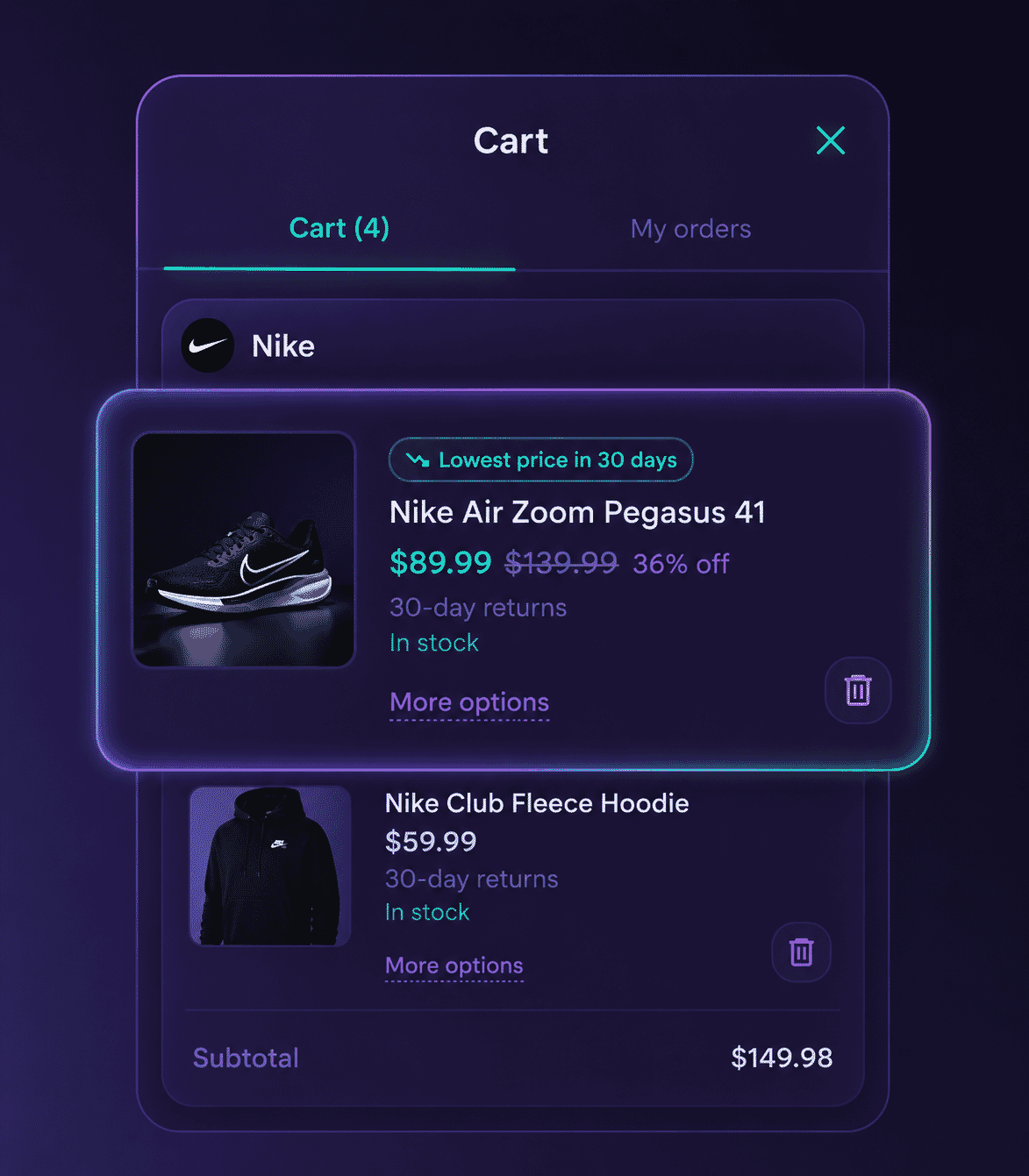
At Google I/O 2026, Google announced the Universal Cart, its agentic hub for managing all of your shopping in one place.
The tech giant also announced updates to its Agent Payments Protocol (AP2) and teased that it would bring the technology to Google products in the coming months, enabling users to authorize agents to make payments on their behalf.
Agentic commerce continues to be baked into the search engines that your customers use every day.
Below we break down what was announced, what it means in practice, and why eCommerce brands should be paying close attention.
What is Google’s Universal Cart?
The Universal Cart is a single, AI-powered shopping cart that works across Google’s entire ecosystem. Shoppers can add products while browsing Search, chatting with Gemini, watching YouTube or reading Gmail, the entire transaction can take place without ever leaving Google.
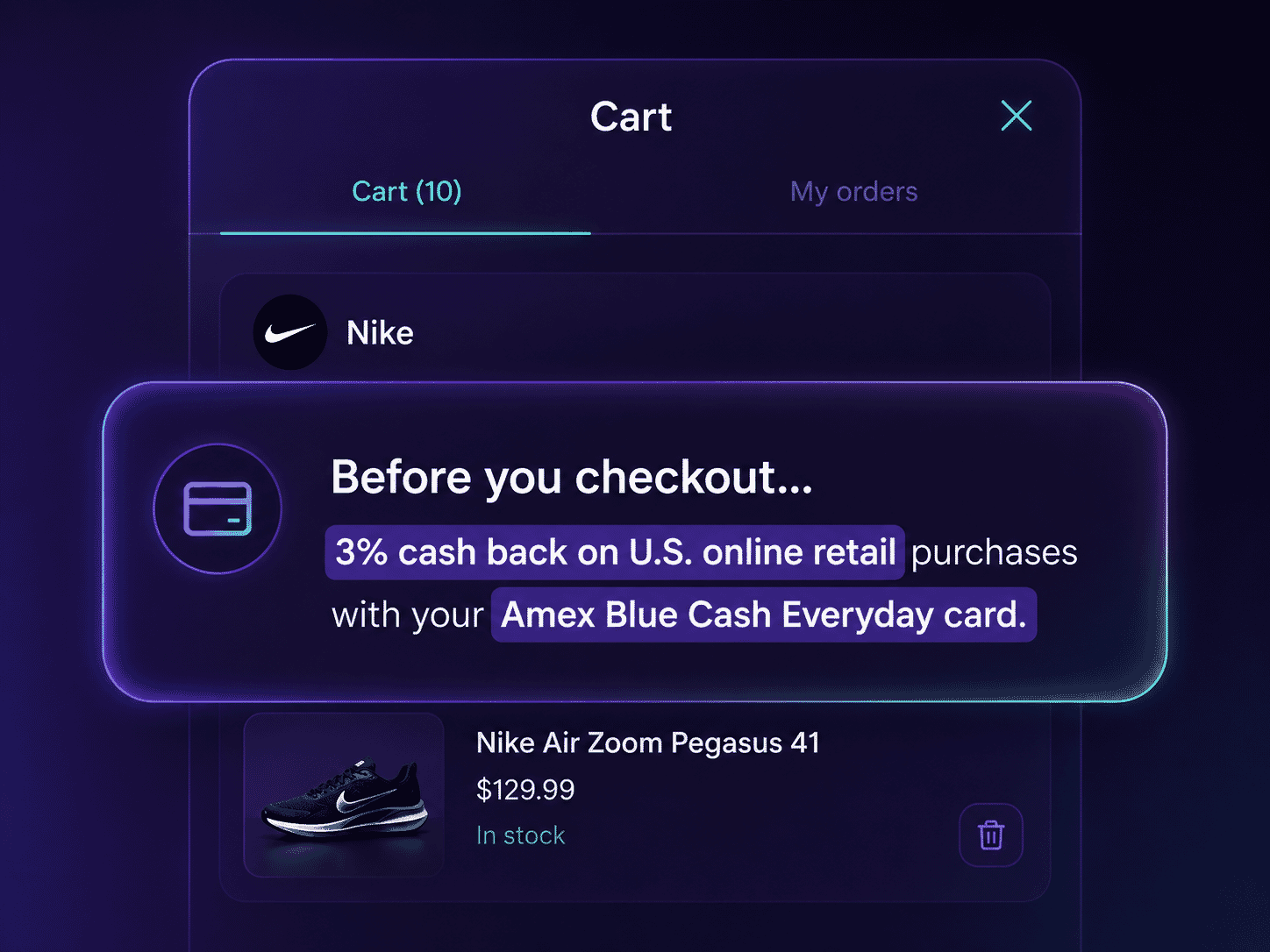
Powered by Gemini, the cart runs in the background to monitor price drops, track price history, flag when items come back into stock, and surface loyalty points or card perks the shopper might otherwise miss.
If a customer adds multiple components from different retailers, say, parts for a custom PC build, the cart will proactively flag compatibility issues and suggest alternatives. Essentially, a personal shopping assistant built directly into the checkout flow.
When the shopper is ready to buy, they can complete the purchase via Google Pay in a few taps, or transfer their basket to the merchant’s site. Either way, the brand remains the merchant of record.
The Universal Cart is rolling out across Search and the Gemini app in the US this summer, with YouTube and Gmail to follow.
Early checkout partners include Nike, Sephora, Target, Ulta Beauty, Walmart, Wayfair and a range of US-based Shopify merchants including Fenty and Steve Madden.
The bigger picture: three pieces of infrastructure, one direction of travel
Google announced two further developments that form part of the same architecture.
Universal Commerce Protocol (UCP): the shared technical language that allows AI agents to interact with merchants is expanding beyond the US. Checkout via UCP is coming to Canada, Australia and later here in the UK, and is also being extended to YouTube in the US and into new sectors including hotel booking and local food delivery.
Agent Payments Protocol (AP2) is the payment rail that allows AI agents to make purchases on a customer’s behalf within defined guardrails. A shopper can instruct an agent to buy a specific product from specific brands, up to a set spend limit, and the agent only acts when those criteria are met. Every transaction creates a tamper-proof digital record, shared between the shopper and the merchant. AP2 will begin rolling out to Google products in the coming months, starting with Gemini Spark.
What this means for eCommerce brands
The implications are real and, for many brands, more immediate than they might expect.
Product data becomes more critical than ever. If an AI agent is comparing, selecting and purchasing products before a human has seen the results page, the quality of your product feed is even more vital than ever. Incomplete titles, missing attributes, inconsistent pricing or poor images are the signals an agent uses to rank or dismiss you.
Discovery is changing. The customer journey has always been non-linear, but Google’s announcements push it further still. A shopper might add your product to their cart from a YouTube video, get a price drop alert in Gmail, and check out via Gemini – never visiting your website at all. Your presence in Google’s ecosystem, not just your own site, determines whether you make it into that journey.
Shopify merchants have an early entry point. The checkout integration is already live with Shopify merchants. If your store runs on Shopify, this is worth exploring now rather than waiting for the wider UK rollout.
Trust signals matter more, not less. When an agent is making or influencing a purchase decision, the signals that build trust – reviews, ratings, returns policy clarity, verified merchant status – carry more weight, not less. The agent is optimising on behalf of the shopper, and those signals feed directly into that optimisation.
Taken together, these three elements; Universal Cart, UCP and AP2 form the foundation for a shopping experience where the customer sets intent and an agent handles execution while never leaving Google.
The bottom line
The Universal Cart is the first significant step to making agentic commerce tangible for everyday shoppers and that means the time for eCommerce brands to understand and prepare for this shift is now, not just when it lands in the UK.
The brands that benefit most from agentic commerce will be the ones with clean data, strong trust signals and a presence that extends beyond their own website. That is not a new idea. But the risk of doing nothing just got higher.
Are you prepared for agentic commerce?
Contact one of our eCommerce experts for an honest 30-minute conversation about how to prepare your brand for agentic commerce and whether your website is AI Optimised.

Sign up to our newsletter
Keen to learn more about how to grow online?
Get our latest advice articles, masterclass
videos and webinars.
curious for more?