



Blog
AIO vs SEO: what’s the difference and why your brand needs both

Christian
Head of Search

Read about the key trends affecting eCommerce with our latest eBook

Updated October 2026: We first published this article in July 2025, when AIO was the name we used for optimising for AI search, and the video that goes with it uses the same term. Since then, the search industry has been leaning towards generative engine optimisation (GEO), and more brands are now using it. The term comes from a November 2023 research paper, GEO: Generative Engine Optimization. In the UK, people now search for “GEO vs SEO” around 30 times as often as “AIO vs SEO” (SE Ranking, October 2026). You’ll also see answer engine optimisation (AEO), so if you’ve been reading about GEO vs SEO or AEO vs SEO, it’s the same comparison.
When we wrote this, AIO was a separate SOZO service. We don’t get hung up on acronyms, and we now deliver traditional and AI-driven search together as one joined-up search service. This page also now includes the most useful parts of our 2023 article on how AI is transforming SEO for SMEs.
As search behaviour shifts rapidly from traditional engines like Google and Bing to conversational AI tools like ChatGPT, Google Gemini, and Perplexity, brands must adapt or risk being left behind.
While SEO helps brands rank on search engine results pages, AIO ensures your business is recognised, cited, and trusted by AI tools delivering answers, recommendations, and content directly to users.
With AI now acting as the gatekeeper of online discovery, understanding and implementing AIO is no longer optional, it’s essential.
Watch our video on the differences between AIO and SEO
At SOZO we’ve launched our AI search Optimisation (AIO) service: a dedicated strategy designed to help your brand show up in AI-generated answers, not just search engine listings. And while AIO and SEO work in harmony, they are not the same, and understanding the difference is crucial for any brand that wants to stay visible.
Why the rise of AI requires a new approach
Search engines like Google crawl and index billions of pages in real time and return results based on relevance, keywords, and links. By contrast, Large Language Models (LLMs) like ChatGPT and Gemini are trained on huge datasets, including websites, books, and forums, and use that training to generate responses based on what they’ve learned. They don’t just retrieve answers – they create them.
AI isn’t new to search. Google has used it to understand queries since BERT in 2019, tested AI-generated answers as the Search Generative Experience in 2023, and launched them as AI Overviews in May 2024. What has changed is that AI now writes the answer as well as ranking the results.
This difference is critical for brands to understand.
While SEO remains essential for visibility on traditional search engine results pages (SERPs), it doesn’t guarantee that your brand will be mentioned, cited, or trusted by AI tools. That’s where AIO comes in.
What is AIO?
AI search optimisation (AIO) is the process of improving your brand’s visibility within AI-generated answers, summaries, and conversations. It’s not about rankings, it’s about:
-
Being cited as a trusted source
-
Appearing in AI-powered answers
-
Shaping how AI models understand your brand
Where SEO targets algorithms like Google’s to improve ranking positions, AIO targets LLMs like ChatGPT and Gemini to improve brand perception and representation in AI responses.
At SOZO, AI Search Optimisation is a dedicated service, not a feature of SEO. It includes a combination of strategic content work, technical optimisation, and real-time analysis to improve your visibility across AI tools.
AIO vs SEO: key differences
| Feature | SEO | AIO |
|---|---|---|
| Focus | Rankings on Google/Bing | Brand mentions in AI-generated content |
| Tactics | Keywords, metadata, backlinks, technical SEO | Structured data, entity clarity, semantic signals |
| Data Sources | Real-time crawl of indexed pages | LLM training data + live citation signals |
| Update Frequency | Frequently updated by algorithms | Model retraining + live citation inputs |
| Success Measurement | Rankings, traffic, conversions | Citation frequency, brand sentiment, authority in AI platforms |
A strong SEO foundation supports AIO, but AIO goes further, addressing brand authority and visibility in the context of how AI tools generate answers.
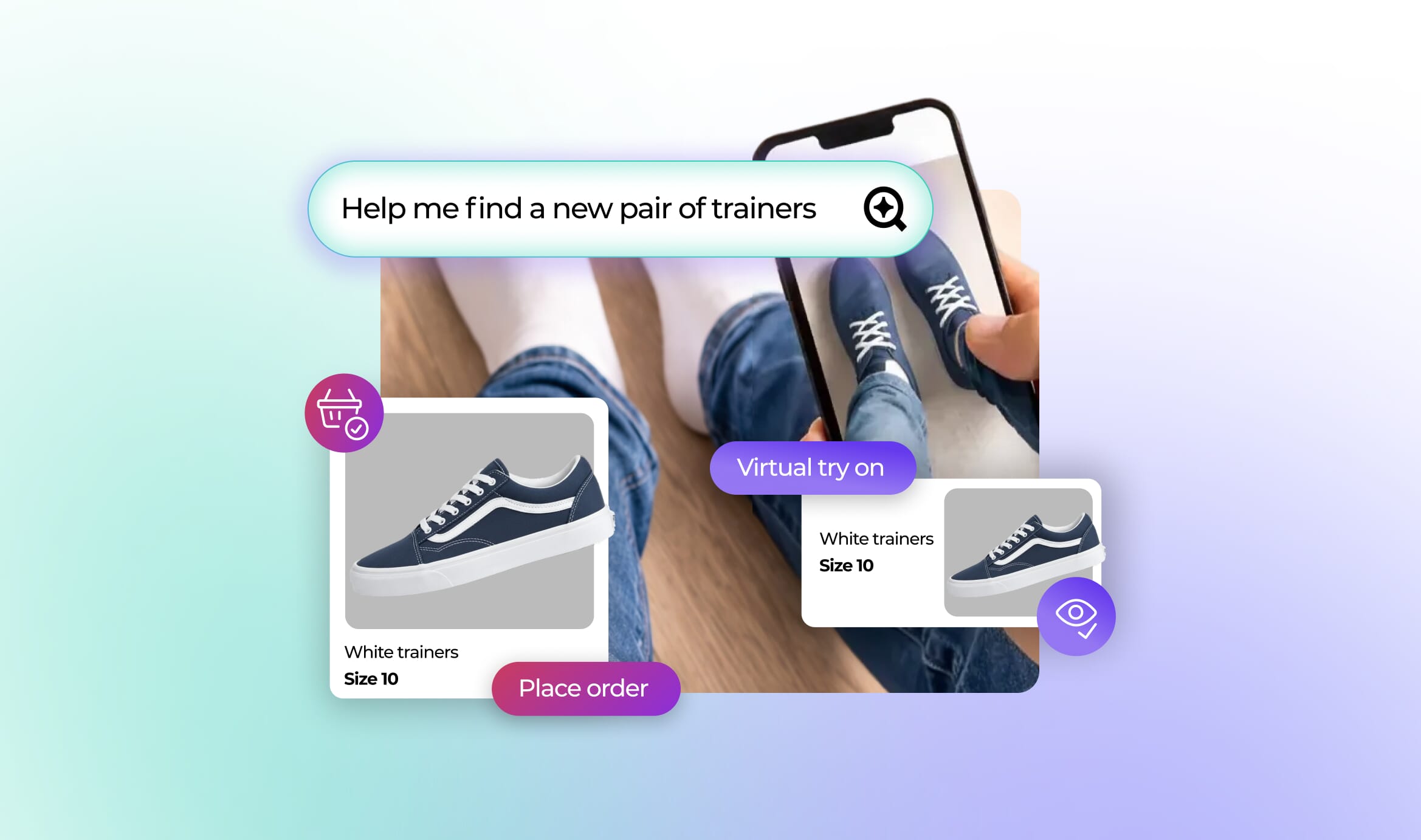
Are you ready for Agentic Commerce? Read our blog on AI powered retail.
SEO vs AIO: an example of the difference
SEO is about visibility in search results. AIO is about presence in the answers themselves.
Using our own brand as an example, when someone asks ChatGPT for “reputable digital agencies in Cheltenham”, SEO won’t help you unless the model has learned about your business and trusts it enough to include it in its answer. AIO is how we make sure it does.
If your brand isn’t known to the model, it won’t be mentioned; you’re effectively invisible.
How to optimise for AI search
We help our clients:
-
Analyse where their brand is appearing across AI tools
-
Understand how often they’re mentioned, and what the context is
-
Improve their authority and perception in the eyes of these models
-
Maintain behind-the-scenes technical setup (e.g. guiding AI to your key content)
We also implement technical improvements such as LLM guidance files, which help steer AI tools to your most valuable content, improving the accuracy and consistency of how your brand is represented.
Using industry-leading AIO tools, we give our clients clear, actionable insights, not just theory. That’s why AIO is a dedicated service. It demands its own approach, goals, and execution.
How to improve your visibility in AI search
Here are some practical AIO strategies we help our clients implement:
-
Answer real user questions in your content (think: “how”, “why”, “what’s the best way to…”)
-
Use schema and structured data to help AI tools interpret your content
-
Create authoritative content (e.g. research, case studies, reviews, media coverage)
-
Ensure brand consistency across Wikipedia, TrustPilot, Reddit, social platforms, and directories
-
Guide AI tools to the right content (via technical setup and site structure)
AI can help you produce that content, as long as a person stays in charge of it. Google’s guidance is that appropriate use of AI or automation is not against its guidelines, and that it focuses on the quality of content rather than how it’s produced (Google Search Central, February 2023). When we used AI-assisted articles for a new online brand, Indulge Brownies, in 2023, they drove around half of its organic traffic in its first year. Our view hasn’t changed since. AI speeds up drafting, but someone who knows the brand needs to check and edit everything it produces. There’s more on that in the dangers of AI-written website content.
Why AI search optimisation matters right now
The world of commerce is experiencing a significant shift in buyer behaviour, with AI is redefining how users discover, consider and then continue to engage with branded content.
AI-powered search is changing how people find and trust information. We’re entering a world where:
- Search is no longer a list of 10 traditional links to websites
- AI tools are acting as gatekeepers to information, and surfacing content from websites
- Brand visibility depends on what the AI knows about you
Users are making decisions before they land on your site. AI search optimisation ensures your brand is represented accurately, confidently, and frequently in these new formats.
Businesses that embrace AIO now will be better positioned to lead in the AI era, capturing early visibility, trust, and authority in the eyes of both algorithms and users.
The future of AI search optimisation
As AI continues to dominate how content is consumed, AI search optimisation will be a fundamental part of digital marketing, not a nice-to-have.
But this isn’t about chasing another trend. It’s about preparing for a future where discovery, research, and recommendations are AI-led. In this future, what the AI believes about your brand will matter more than ever.
SEO and AIO: why you need both
AIO and SEO are not interchangeable, but complementary:
-
SEO gets you found in traditional results
-
AIO gets you cited in AI-generated answers
In today’s evolving search landscape, brands who invest in both will be best positioned to grow visibility, trust, and leads, wherever their customers are searching.
Final thought
AIO is not a bolt-on to SEO – it’s a new layer of visibility. And it’s already transforming how people find and engage with brands.
At SOZO, we offer both services and are working closely with our clients to support wider adoption of AI, helping them unlock new efficiencies, improve productivity, and stay ahead of competitors.
We deliver SEO and AI search optimisation together, because success in 2026 means being visible everywhere people search, not just on Google.
Our free AI search visibility audit shows how your brand appears in AI search today, and we’ll go through the findings with you in a 30-minute consultation.
If you want to stay visible, relevant, and competitive in this new era of search, get in touch today.
About the author
Christian Goodrich is Head of Search at SOZO, where he’s led the search team for more than 12 years. Across a career of more than 18 years, he’s helped brands turn search into revenue through SEO, paid search, conversion rate optimisation and website development. His focus now is helping brands get found by the right customers in AI-driven search as well as traditional search, as part of one joined-up strategy. He speaks regularly at brightonSEO, Hero Conf and MeasureFest, and spoke on AI search at eCommerce Expo London in 2026. Connect with Christian on LinkedIn.

Sign up to our newsletter
Keen to learn more about how to grow online?
Get our latest advice articles, masterclass
videos and webinars.
curious for more?