




Blog
Why human-centric marketing wins in a AI age

Joseph Hirst
Marketing Director

Introduction
We are living through the most technologically advanced era in marketing history.
Tools powered by AI, deliver automation, machine learning, programmatic targeting, behavioural analytics, hyper-personalised advertising, data platforms and instant content generation with a promise of faster output, smarter decisions and higher returns.
With just a few clicks, brands can produce campaigns that once required agencies, large teams, or weeks of planning. On paper, marketing should be easier than ever.
Yet paradoxically, marketing has never felt more complex, overwhelming, or crowded.
In the pursuit of efficiency, many brands have shifted their focus away from the fundamentals of communication and human psychology, and towards the mechanics of content production, funnels, dashboards and algorithm-focused activity.
They are optimising for systems, not people and run the risk of marketing to search engines, not to the humans typing keywords into them.
While technology can absolutely enhance performance, it can also amplify irrelevance.
In an interview with the BBC Sundar Pichai, chief executive of Alphabet, Google’s parent company, warned that AI models are “prone to errors” and urged people to use them alongside other tools.
When marketing becomes robotic, transactional, or formulaic, it loses the emotional spark that motivates real people to connect, trust and buy.
In this blog, Marketing Director Joseph, explains why human-centric and not just tech-centric marketing, is what will define the leading brands of the next decade.
Tech-driven marketing: a double-edged sword
Digital marketing has evolved rapidly, especially in the last five years. AI tools can write, design, transcribe, analyse, plan and automate. Martech platforms can build journeys, segment audiences, track behaviour and optimise touchpoints. Personalisation engines can adapt messaging instantly based on user actions.
None of this is bad, in fact, it’s hugely valuable. But it becomes dangerous when it replaces thinking instead of supporting it.
Some common symptoms of tech-centric marketing include:
- Publishing large volumes of generic content “because consistency matters”
- Using tools to generate content without extracting real customer insight
- Relying on dashboards instead of conversations to understand customers
- Building funnels without considering emotional buying triggers
- Using the same messaging for all audiences and all channels
- Prioritising efficiency over personality and relevance
The result? More marketing activity, but less marketing impact.
While algorithms surface you brand, humans buy it.
Marketing is ultimately a psychological and emotional discipline. At its core, it seeks to influence behaviour, reduce uncertainty, build trust and inspire decisions. No matter how sophisticated automation becomes, it is still human beings that:
- Make decisions based on emotion before rational justification
- Crave meaning, identity and belonging
- Respond to storytelling more than statistics
- Value authenticity over volume
- Buy from brands that reflect their values
Tech can help to generate content at scale, but scale means nothing if it doesn’t resonate with a target audience.
Remember, just because content can be produced faster doesn’t mean it is more valuable.
Again, Sundar Pichai highlighted the importance of having a rich information ecosystem, rather than solely relying on AI technology. Don’t blindly trust what AI tells you, Google boss tells BBC – BBC News
Why going back to marketing fundamentals matters
The most successful brands continue to invest time and energy in understanding real people. They ask questions, test assumptions, collect user case stories and listen deeply in order to segment their audience base.
Strong marketing is still rooted in:
- Audience clarity: Not broad demographics, but lived realities. What does a day in their life look like? What keeps them up at night? What motivates change?
- Emotional insight: What do they fear losing, and what do they hope to gain? Emotion is the currency that drives attention and buying decisions.
- Clear value position: What can you offer that actually improves their situation? Differentiation that matters is not simply “what makes us different”, but “what makes us different in ways our customers care about.”
- Human language and storytelling? Messages become memorable when they feel personal, vivid and authentic. Brands create loyalty when they align with customer’s values. This is why stories outperform statistics.
- Creativity and expression: In a saturated digital environment, the boldest ideas stand out, not the most automated ones.
Without these fundamentals, marketing becomes noise: technically accurate, strategically misplaced, emotionally void.
Watch our video on the importance of clear objectives.
Technology as the enabler, not the driver
The smartest marketing teams today think differently. They don’t reject technology, they curate it, use, it and enhance their efforts by applying tools intentionally rather than reactively.
Tech should serve these purposes:
| Purpose | Examples |
| Support thinking | Research, analysis, insight discovery |
| Improve experience | Personalisation, ease of access, UX |
| Speed up execution | Templates, automation, scheduling |
| Scale what works | Retargeting, data-led optimisation |
| Measure outcomes | KPIs, analytics, attribution |
If tech is the vehicle, human insight is the navigation system. If creativity is the fuel, purpose is the destination.
If technology becomes the driver, you risk travelling fast, but in the wrong direction.
Human storytelling at every stage of the marketing funnel
Digital marketing today requires full-funnel thinking: awareness, consideration, conversion and retention. But each stage requires different communication, different emotional triggers, and different value exchange.
- Awareness requires curiosity: show your audience who you are what you do and why they should buy from you
- Consideration requires reassurance: prove your credibility, authority and trust across various platforms
- Conversion requires clarity: provide reasons to act now, not later
- Retention and advocacy requires a relationship: grow your community, keep supporting it, keep surprising it
The mistake many brands make is using the same message everywhere, hoping volume will compensate for lack of nuance. Instead, marketing teams must think like filmmakers: same story, different scenes, tailored to the viewer’s moment.
Nurture is greater than noise
With AI-enhanced content creation, attention has become an even rarer commodity. Every brand is speaking louder, posting more frequently, and automating faster.
But loyalty doesn’t grow through noise, it grows through nurture.
Human-centric nurturing of a retained customer base means:
- Provide value even before they buy
- Be generous with knowledge
- Inviting conversation, not just conversion
- Celebrating customers publicly
- Entertaining, educating, inspiring and guiding
In other words, behave more like a partner than a salesperson. The brands that win will be the ones that feel helpful, relatable, entertaining and informative; just like a human you want to engage with.
Examples of brands that humanise their marketing
Some of the most successful modern brands succeed not because of the tech they use, but because of the empathy and creativity behind it:
- Nike focuses on identity, not product features
- Patagonia leads with values and activism
- Duolingo builds playful, social-first personality
- Apple markets emotion, not specs
- Monzo communicates like a friend, not a financial institution
Technology amplifies their message, but it is the message, the tone and the human-driven brand values that inspire loyalty.
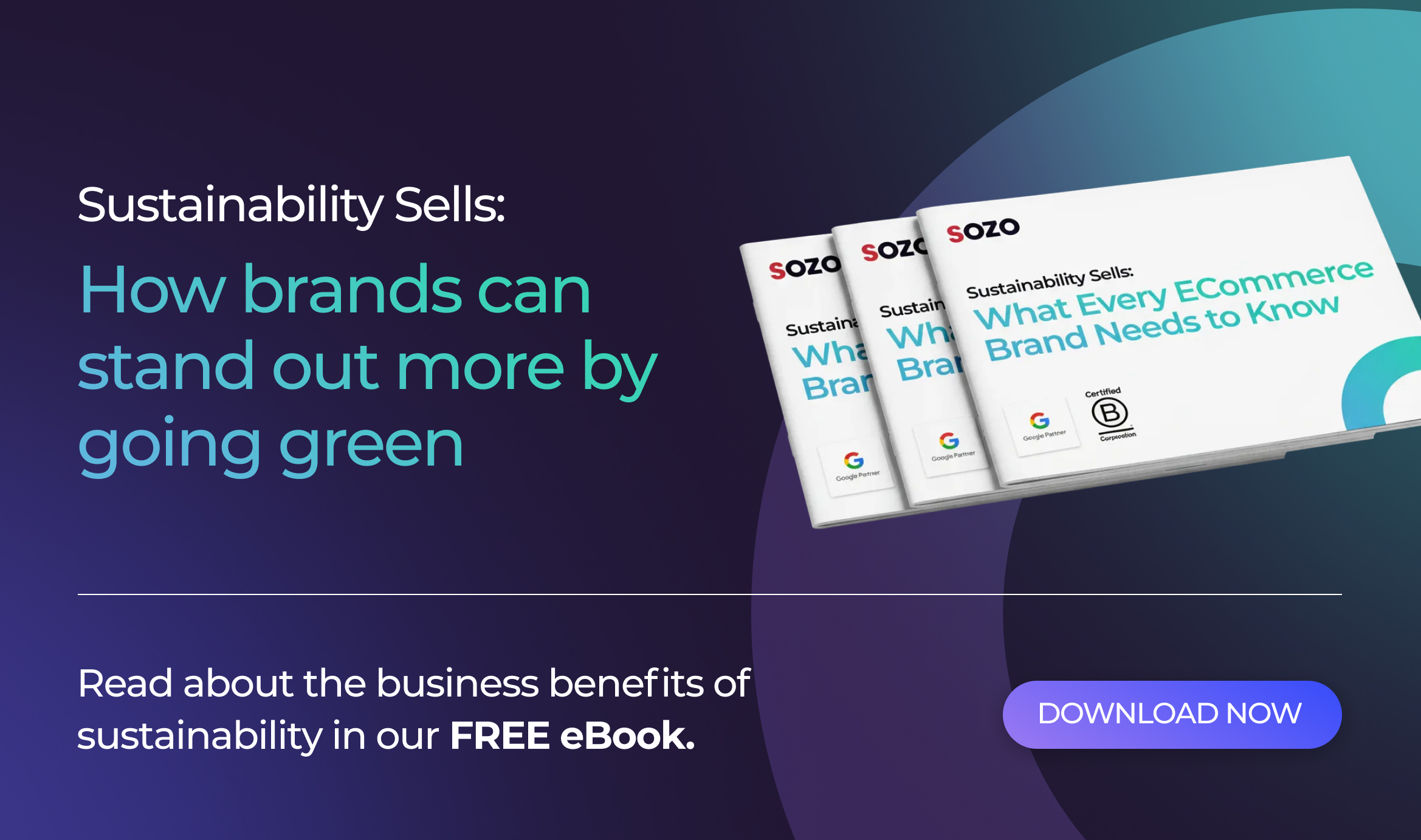
If you are looking for messaging inspiration read our blog on the ability of sustainability to sell, or download our eBook.
A simple human-centric framework for marketing teams
Here is a workable model to apply to any marketing strategy:
- Understand the human. Research deeply, not superficially. Speak to your actual customers. Observe their behaviour, don’t rely on just stated opinion.
- Build around emotion, not features. Ask: How do we want people to feel before, during and after interacting with your brand?
- Craft distinct, memorable messaging. Clarity over cleverness; create meaning for metrics.
- Design with creativity and personality. Dare to be different — sameness is invisible.
- Choose channels intentionally. Don’t show up everywhere. Show up where it matters.
- Use technology to enhance, not replace. If a tool removes empathy, don’t use it.
The future of marketing is not better technology it’s more humanity
AI will continue to evolve. Automation will accelerate. Customer journeys will become smarter and more predictive. But none of that replaces the need for empathy, storytelling, creativity, identity, values, humour, vulnerability and lived human experience.
Technology will win reach, but humanity will create conversions. And it is within these relationships where commercial growth, customer retention and advocacy are built.
The most successful brands of the future will be those who master the balance human-led thinking with tech-enabled execution.
Because at the end of every click, scroll, view, search or swipe, there is still a human deciding “Do I like this, do I trust this, is this for me, why do I need it?”
Marketing becomes powerful not when it is automated, but when it feels human.
If you would like a review of your current digital marketing strategy or how to integrate AI into human decision making contact us today.

Sign up to our newsletter
Keen to learn more about how to grow online?
Get our latest advice articles, masterclass
videos and webinars.
curious for more?