



Blog
AI Search for Shopify: Technical Fixes to Accelerate Your AI Visibility in 2026

Christian
Head of Search Marketing
Introduction
AI-led discovery is changing how customers find and buy online. Instead of scrolling through ten blue links within Google, shoppers are increasingly asking LLMs (Large Language Models) like ChatGPT and Google Gemini to shortlist options, compare products, and make recommendations, often before they ever reach a search results page.
When your store is being referenced in AI-driven answers, you earn visibility at the exact moment shoppers are comparing options and deciding what to buy.
Why this matters now
At SOZO, we designed, built, launched, and SEO-migrated two large eCommerce brands to Shopify in Q4 2025. Since September, we’ve delivered AI search visibility optimisation across 10+ brands, including multiple Shopify stores.
We’ve found that AI visibility gains often come from fundamentals done well: strong technical foundations, clear contextual signals (URL slugs and metadata), and rich structured data, alongside improvements to content.
This guide explains what a comprehensive AI audit looks like in 2026, why technical SEO carries even more weight in AI-led discovery, and the specific fixes that can move the needle.
Why Shopify brands are investing in AIO
Artificial Intelligence Search Optimisation (AIO) is no longer a “nice to have” for ambitious Shopify brands. In 2026, it’s a practical growth lever, particularly for teams looking to protect organic performance, reduce dependency on paid media, and stay competitive as more product discovery happens inside AI interfaces.
Traditional SEO is still critical. What has changed is the decision environment. Customers increasingly ask AI to shortlist options, summarise differences, and recommend products before they click anything. That means your Shopify store needs to be:
- discoverable in traditional search results
- interpretable by AI systems and shopping assistants
- consistent and accurate across product, collection, and support content
A well-executed AIO audit ensures your store is not just indexable, but also understandable and recommendable in AI-driven experiences.
The rise of AI-led discovery and why it matters for Shopify
Search behaviour is changing faster than many eCommerce teams realise. Consumers are using AI tools to narrow choices, compare products, and decide what to buy, often before a traditional search results click ever happens.
For Shopify brands, this creates a simple commercial reality: if AI systems do not understand your store, they will recommend your competitors instead.
You now need to satisfy three “readers” at the same time:
- Human shoppers, who need clear, confidence-building information
- Traditional search engines, which still determine rankings and traffic
- AI models, which interpret your site and decide what to cite or recommend
Traditional SEO helps you rank. AIO improves the likelihood that AI systems can accurately interpret your products and include your store in answers, buying guides, comparisons, and recommendations.
A key 2026 shift: AI can be more surface-level than traditional search
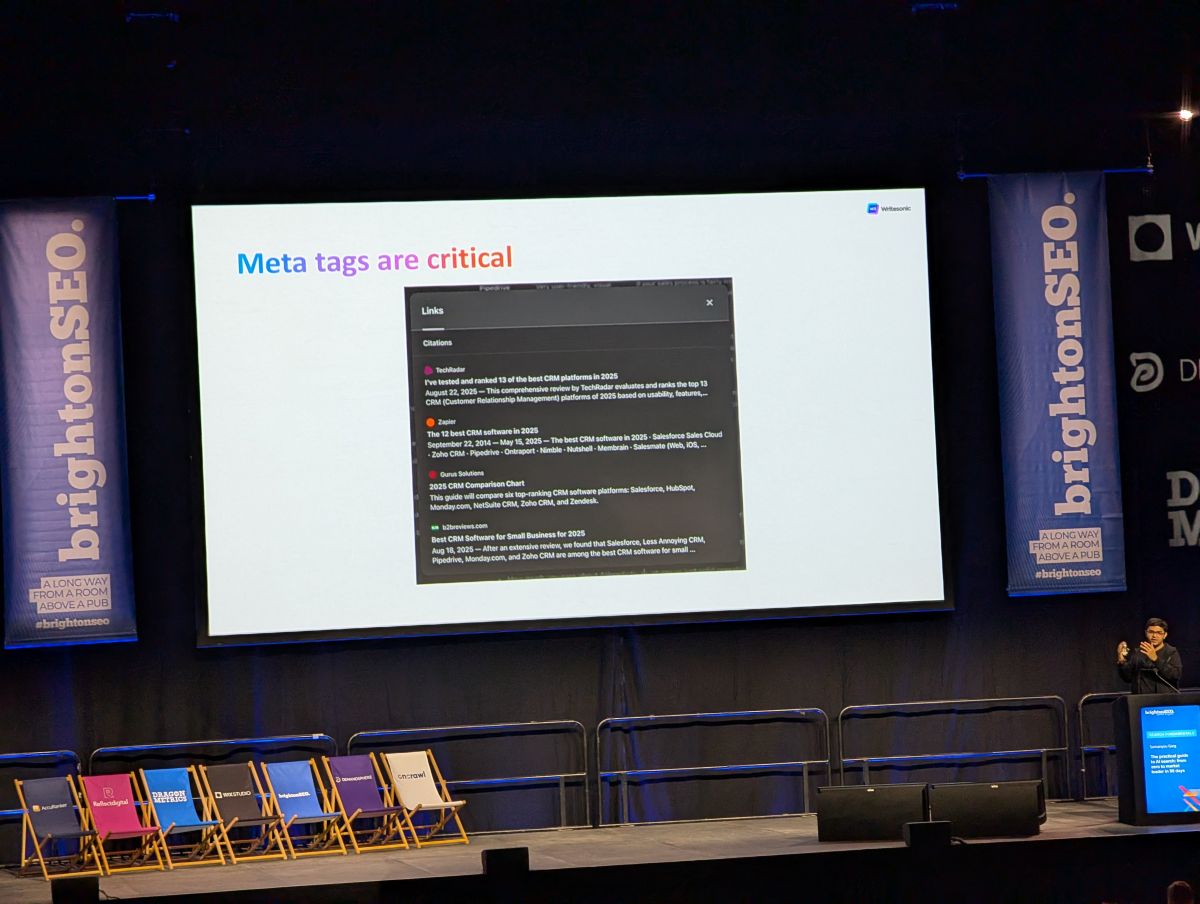
One of the most useful learnings raised at brightonSEO in October 2025, and reinforced by our own first-hand testing, is that many AI systems can interpret pages in a more surface-level way than traditional search engines.
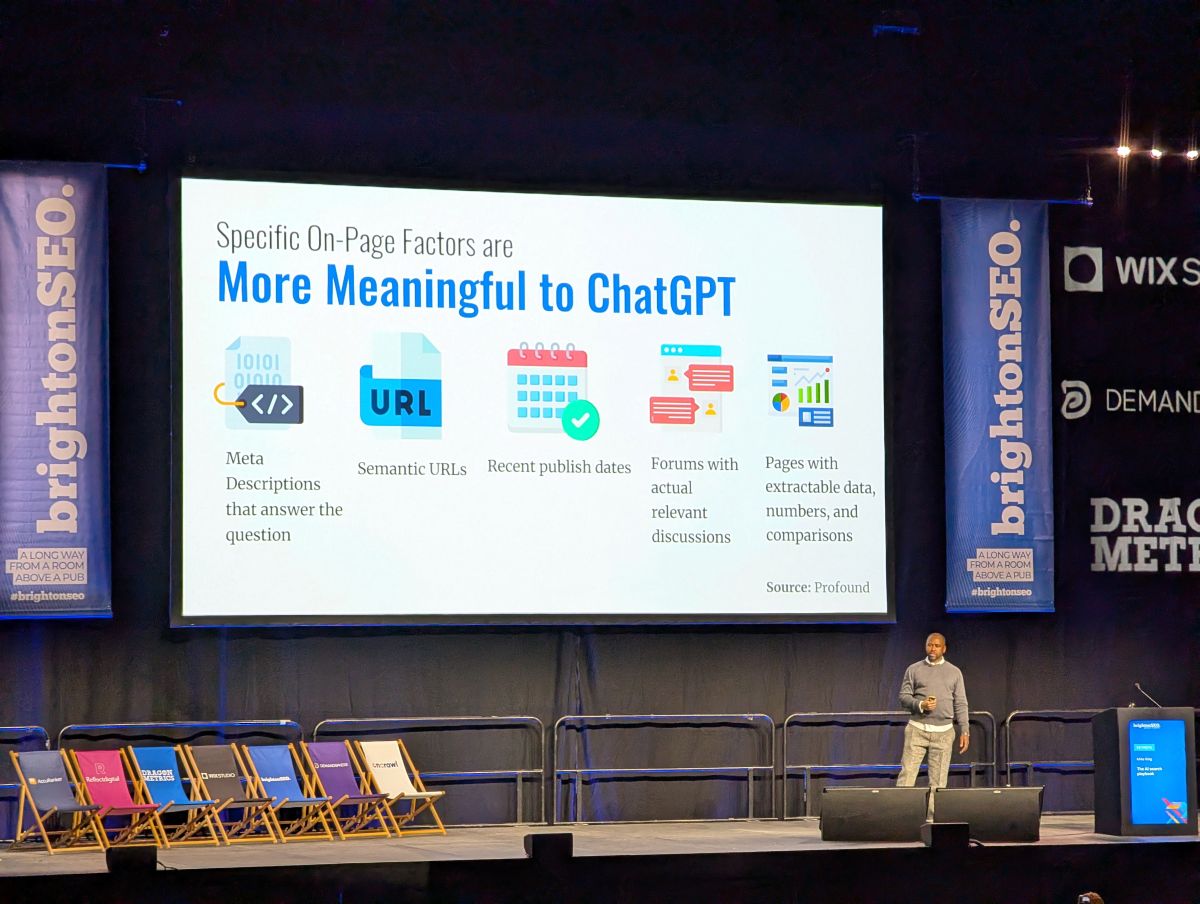
In practice, LLMs often lean heavily on contextual signals to infer what a page is about, including:
- URL slugs
- meta titles
- meta descriptions
- internal linking cues
- structured data
We’ve repeatedly seen examples where an AI model, when supplied with a URL, will make assumptions based on those signals without necessarily reflecting the depth of information on the page itself.
For Shopify brands, this changes prioritisation. Your best content will not perform as strongly in AI-led discovery if the surrounding signals are weak, inconsistent, or misleading.
This does not replace traditional SEO fundamentals; it amplifies them.
Why “top citations” matter more than “Position 1” in AI search
In an AI-led experience, the customer often sees a short answer with limited sources. Being ranked first is no longer the only prize. Being selected as a cited source can be the difference between visibility and invisibility at the moment the customer is deciding.
Top citations matter because:
- AI systems surface a smaller set of sources than a traditional results page
- credibility and clarity determine which sources are referenced
- citations and recommendations often influence high-intent decisions
For Shopify merchants, winning citations requires more than keywords. It requires clear product understanding, strong technical foundations, and consistent signals across your store.
How AIO and SEO work together
AIO is not a replacement for SEO. It builds on it.
SEO continues to cover:
- crawlability and indexation
- internal linking and site architecture
- page performance and Core Web Vitals
- canonicalisation and duplicate management
- metadata hygiene and template consistency
AIO adds:
- deeper structured data that clarifies product attributes and use cases
- content structured for direct answers and comparisons
- semantic clarity that supports AI summarisation and reasoning
- AI visibility monitoring and optimisation loops
Think of SEO as the foundation and AIO as an additional layer that improves how AI systems interpret and recommend your store.
Want to know more about SEO and AIO AIO vs SEO: The Key Differences and Why You Need Both
What a comprehensive AIO audit should include for Shopify
A robust Shopify AIO audit covers both technical infrastructure and semantic content. The goal is not just “more content”, but better interpretability across the signals AI relies on.
1) Technical foundations that remove disruptors
In 2026, technical site auditing is more important than ever. It’s no longer just about users and traditional search crawlers. It’s also about ensuring AI systems can access your content, interpret it correctly, and surface it in AI-led experiences.
A strong audit will review:
Structured data (JSON-LD) depth and accuracy
Shopify stores often rely on default markup that is too shallow for modern AI interpretation. Beyond basic Product markup, your schema should support:
- materials, dimensions, and care instructions
- variants, availability, and pricing clarity
- product use cases and compatibility where relevant
- FAQs, how-to content, and collection-level context
This is one of the clearest levers for helping AI systems compare, summarise, and recommend your products accurately.
Core Web Vitals and performance
Fast, stable pages reduce friction for users and remove barriers for crawling, rendering, and indexing. The audit should focus on practical improvements to:
- Largest Contentful Paint (LCP)
- interaction responsiveness
- layout stability
Robots.txt, sitemaps, and indexing controls
Ensure the right pages are accessible and discoverable, especially around Shopify templates and collection structures. Verify that:
- sitemaps are accurate and current
- canonical signals are consistent
- indexation controls are aligned to commercial priorities
Read more on how Core Web Vitals can boost search visibility Boost eCommerce SEO by Optimising Core Web Vitals
2) Contextual signals that AI systems lean on heavily
If you take one thing from this article, it should be this: in AI-led discovery, contextual signals often carry more weight than teams expect.
URL slugs that describe, not just label
For Shopify brands, this means ensuring product and collection URLs communicate intent clearly.
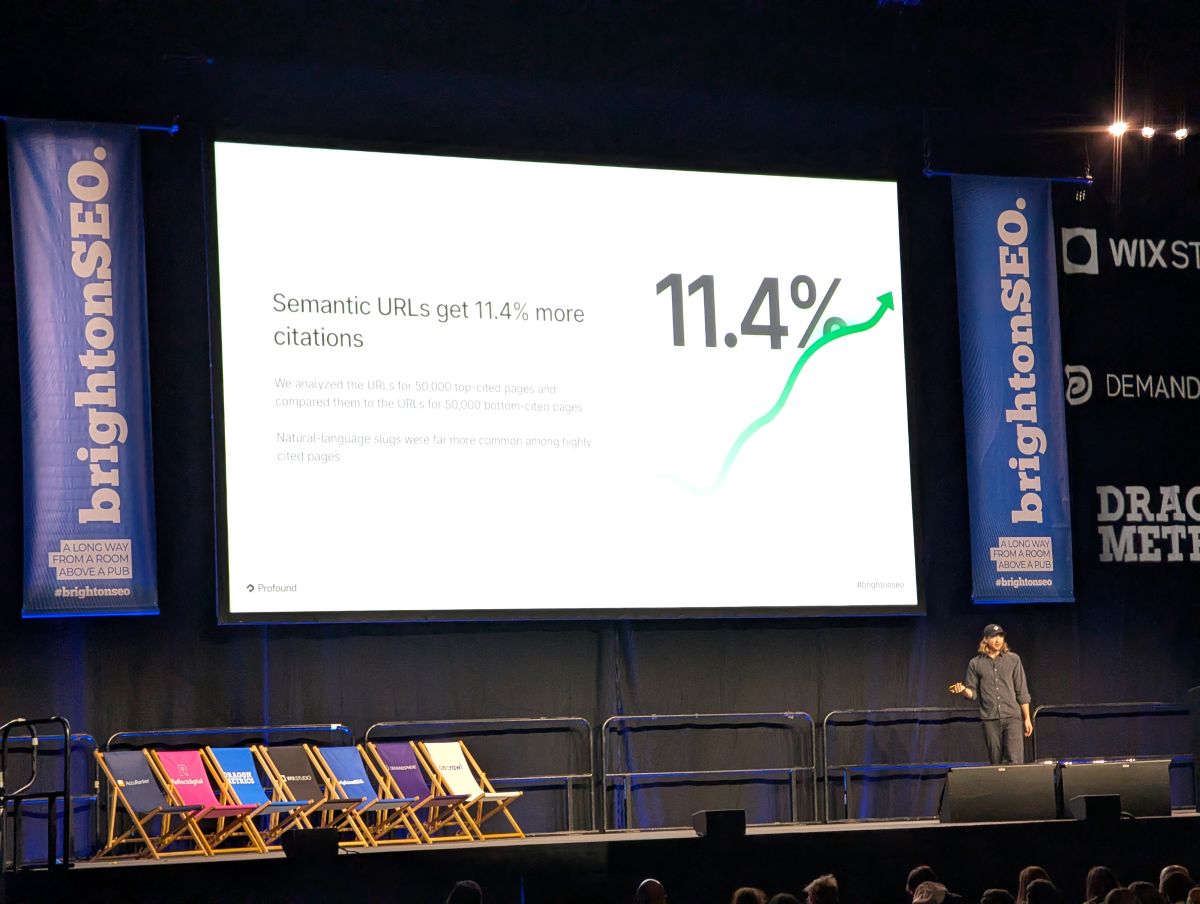
Good examples:
- /mens-waterproof-hiking-jacket/
- /womens-sustainable-activewear/
- /blackout-curtains-by-the-metre/
We have scrutinised URL slug clarity at scale for Shopify stores, particularly after platform launches and migrations. It is a practical way to improve interpretability quickly.
Meta titles and descriptions with intent and accuracy
Metadata is not just “for click-through rate”. It is a concise signal that supports both search engines and AI models in understanding page purpose. Your audit should check:
- accuracy (does it match what’s on the page?)
- differentiation (is it distinct from similar templates?)
- intent alignment (is it clear who it’s for and why it matters?)
- consistency across product and collection templates
Internal linking cues and taxonomy clarity
AI systems often rely on how a store is organised to interpret relationships between products, categories, and use cases. A Shopify AIO audit should review:
- collection hierarchy and naming consistency
- internal linking between collections, guides, and product pages
- avoidance of conflicting or duplicated category structures
3) Content improvements that drive both AI visibility and conversion
AI-focused optimisation often improves conversions because it removes ambiguity and forces clarity.
A strong audit will evaluate:
- FAQs written in natural language, answered directly
- product copy that explains use cases, suitability, and differentiation
- collection content that clarifies intent and helps customers compare
- media semantics (image alt text, comparison tables, video context)
- review and community content visibility, where crawlable and useful
4) Recency bias and the need to refresh existing content
Another key takeaway raised by Nick Lafferty (Profound) at brightonSEO in October 2025 was LLM recency bias. In practice, many AI systems show a preference for content that has been published or updated relatively recently.
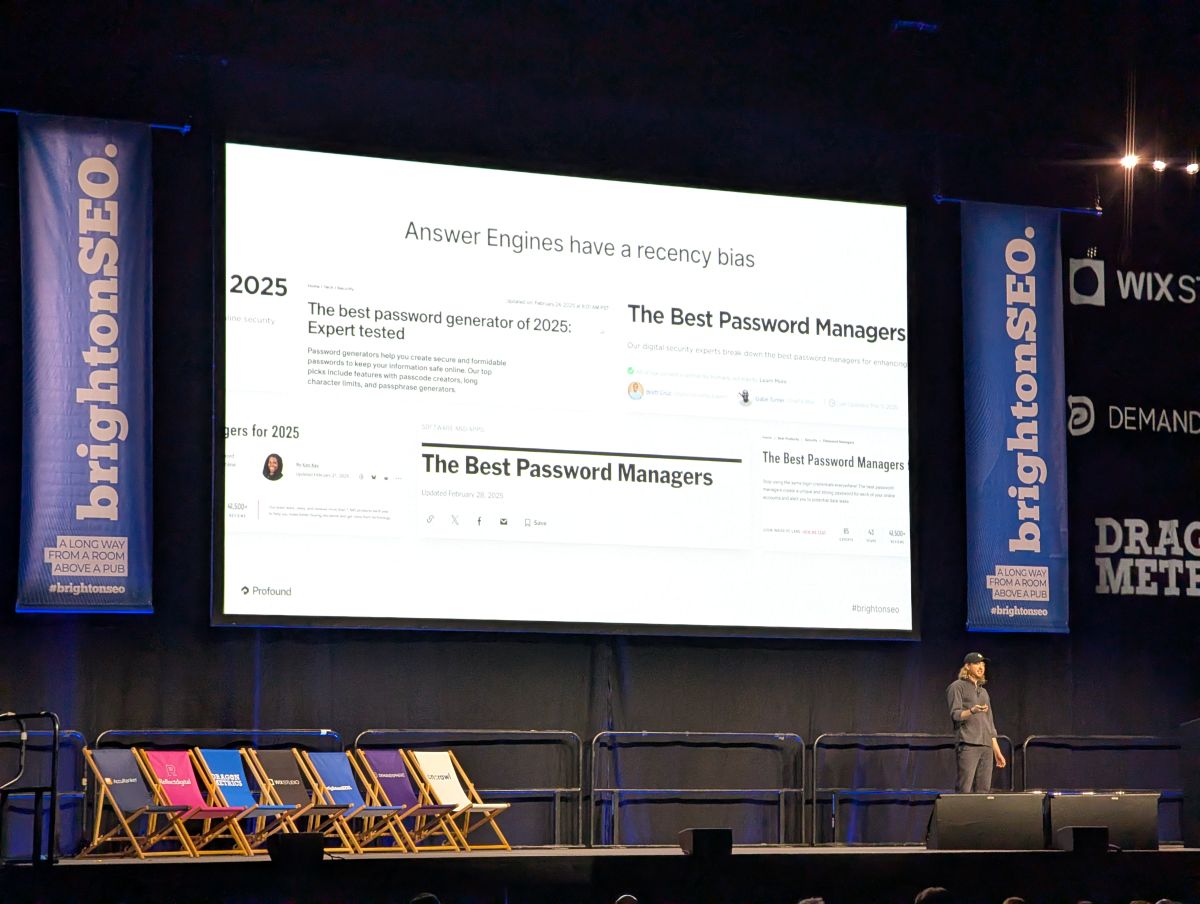
For Shopify brands, that shifts the content model. It’s not enough to create new content and ignore old pages. You need a process to refresh high-value templates and commercial pages, including:
- updating collection copy for current search intent
- improving PDP attribute completeness
- refreshing FAQs and buying guidance pages
- reviewing metadata that no longer reflects how customers search
- strengthening structured data coverage and accuracy over time
This supports both traditional SEO and AI visibility.
Case study snapshot: what technical AIO improvements can deliver

For one of the larger Shopify stores we’ve worked with recently, we prioritised a set of improvements focused on technical foundations and contextual clarity, including:
- URL slug clarity at scale across products and collections
- metadata consistency aligned to search intent
- structured data depth and accuracy across core templates
- technical auditing to remove crawl and indexation inefficiencies
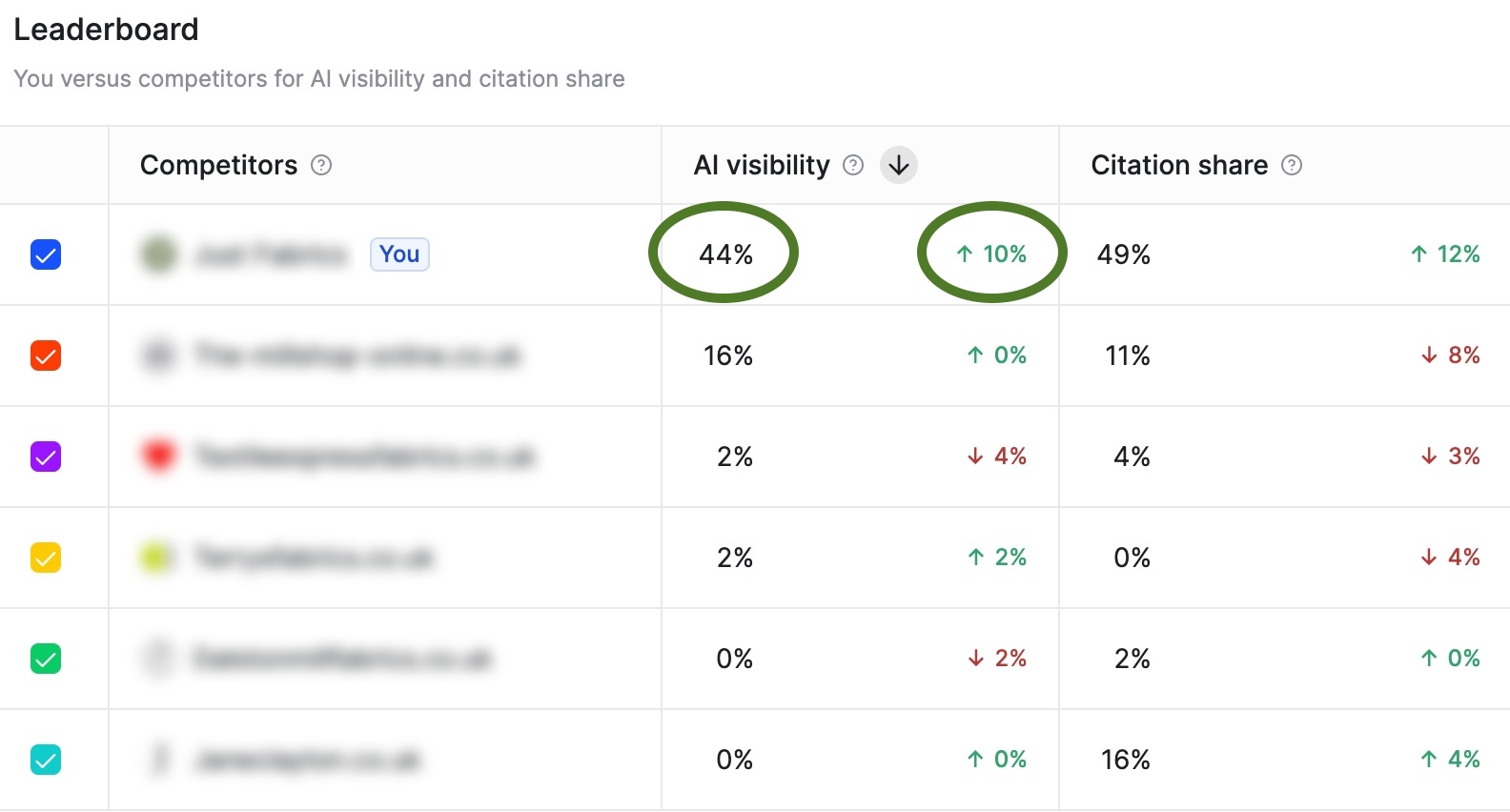
Within weeks of implementation, we saw measurable improvement in AI-led discoverability:
- +10% uplift in overall AI visibility
- +12% uplift in citation share
- a 26% visibility lead over the next closest competitor
We also saw the strongest gains in Google Gemini and AI Mode, where AI visibility increased by up to 36% vs the previous 30 days:
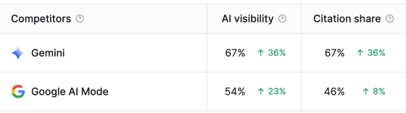
The important point is that the uplift was not driven by just “more content”. It was accelerated by improving how AI systems interpret the store through clearer contextual signals and stronger structured product understanding.
The business benefits of an AI-optimised Shopify store
Most teams hear “AIO” and assume it is a technical checklist. In reality, it is a commercial growth strategy that improves how your store competes and converts.
Higher AI visibility in the moments that matter
AI-led discovery is often a decision shortcut. When your store is consistently referenced, you become part of the customer’s shortlist earlier in the journey.
Improved conversions through clarity
Content built to support AI interpretation is often clearer, more practical, and more confidence-building for humans. Customers convert faster when pages explain:
- who the product is for
- what problem it solves
- what makes it different
- what outcomes to expect
- what to do next, with minimal friction
Better UX through fewer technical blockers
AIO audits frequently surface UX and technical issues that reduce trust and performance, including template inconsistencies, slow pages, and confusing navigation. Fixing these supports customers and strengthens signals across search environments.
Balancing your acquisition mix beyond paid media
Paid media remains important, but CPC inflation, competition, and attribution challenges continue to increase. AIO and SEO improvements strengthen your on-site clarity and reduce friction, which improves the performance of every channel. Once your store’s structure and clarity improve, you create a more sustainable visibility engine that supports multiple channels.
Read more about Shopify Paid Media and SEO good practice Best practice Shopify SEO and PPC
AIO audits on Shopify require careful rollout
Technical changes on Shopify need careful implementation and testing. Incorrect rollouts can have the opposite effect, reducing visibility across traditional search and AI-led results.
For many eCommerce teams, the challenge is not identifying what to fix. It’s prioritising correctly, implementing safely at scale, and validating impact across multiple environments.
How SOZO conducts a full Shopify AIO audit
At SOZO, our audits combine technical precision with commercial prioritisation. A full audit typically includes:
- architecture, crawl, and indexation review across Shopify templates
- metadata and URL clarity analysis at scale
- structured data depth and accuracy assessment
- content and recency review across key commercial pages
- AI visibility benchmarking across competitors and platforms
- a prioritised roadmap split into quick wins and strategic fixes
- ongoing monitoring recommendations to sustain gains over time
- analysing brand sentiment to understand what AI search surfaces about your business (positive and negative)
- identifying which external sources (beyond your website) shape what AI says about your brand
Where Shopify growth is heading next
AI-led discovery is no longer emerging. It is already influencing how customers choose products, and it is accelerating in 2026.
1) AI is shifting demand earlier in the buying journey
Shoppers are increasingly asking AI to shortlist options, compare products, and recommend what to buy. That changes what “visibility” means. It’s not only about rankings and clicks. It’s about being present when the shortlist is being formed.
2) Agentic commerce is raising the stakes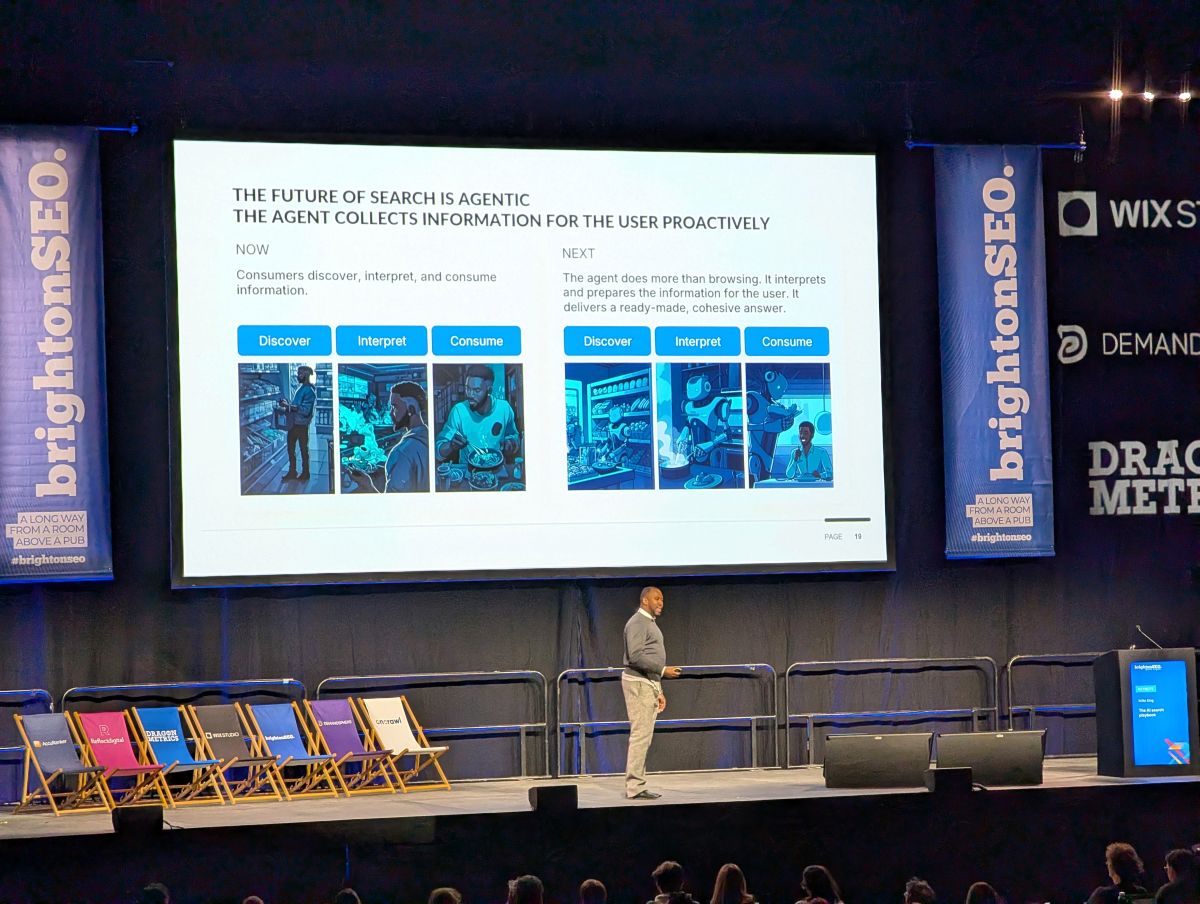
Alongside Google AI Overviews and conversational discovery, we are now seeing the rise of agentic search, where the AI does not just recommend products, but can help complete the purchase journey.
In Q4, we saw the OpenAI launch Instant Checkout and the Agentic Commerce Protocol, enabling US merchants to connect their Shopify stores to ChatGPT. This allows consumers to browse products, compare options, and complete a purchase without leaving the chat interface.
As this model expands, Shopify merchants will need to optimise their stores not just for human shoppers, but for the way AI systems interpret, validate, and act on product data and contextual signals.
3) The winners will treat technical clarity as a competitive advantage
For Shopify brands, the path forward is not complicated, but it does require discipline. Technical foundations, contextual signals, and structured clarity now play a larger role in how your store is interpreted, cited, and recommended.
Book a free AI visibility health check
If you have an existing Shopify store, or you’re planning a move to Shopify, book an initial consultation with Christian and we’ll run a free AI visibility health check.
We’ll show you where you’re already getting discovered, where competitors are winning citations and recommendations, and what to prioritise next to drive more sales from AI-driven search in 2026.
Follow SOZO for practical AI search updates
If you’d like to keep up with the latest shifts in AI-driven search and how they’re impacting e-commerce performance, follow SOZO on LinkedIn.
You can also follow:
- Christian Goodrich, Head of AI Search & SEO at SOZO, sharing regular updates on the latest innovations and changes to search in 2026
- Mark Plunkett, Head of E-Commerce at SOZO, posting thought leadership on how user journeys are evolving with AI and the latest technology launches from platforms like OpenAI and Google
If you’re investing in Shopify optimisation, planning a Shopify migration, or looking to align SEO, AI Search and paid media into a single performance strategy, get in touch, we help turn prospects into traffic and traffic into measurable revenue growth.

Sign up to our newsletter
Keen to learn more about how to grow online?
Get our latest advice articles, masterclass
videos and webinars.
curious for more?